
Aesthetic Procedures - What holds people back?
Are you quietly interested But have worries? read on
Are you quietly interested But have worries? read on
Deciding what, if anything to do with your face, is a little bit daunting. There are a myriad of options: laser, fillers, Toxins, peels, face creams, the list is exhausting. On top of that, with the proliferation of information sources, you can't be sure what you are reading is true. There is a lot of fake news. Sometimes two fake news stories saying the exact opposite of each other. Once you have decided what to do, you then are bombarded with a choice of products and practitioners and a menu of prices.
It all boils down to trust. Do you trust the Doctors experience, training and aesthetic eye.
One size does not fit all. Just because a person can wield a needle doesn't mean you should let them. Also, you tend to get what you pay for.
Do any of these things sound like you?
I don't want to look significantly younger or appear to covet youth
I have been thinking or will think about this for up to 10 years
I am confused and concerned by media stories about treatments
I have a real fear I will no longer "look myself" after treatment
I feel embarrassed about wanting treatment - I feel society will judge me as vain and superficial
You are not alone. In fact, you are perfectly normal. There are millions just like you.
Allergan research shows us that 58.6 million people are interested in non-surgical aesthetic treatments (they counted...). In Ireland we are particularly interested. A recent study from Cork University Hospital (CUH) have discovered we lead the way globally for the number of online searches for lip-fillers, and are third overall for the number of people enquiring about Anti Wrinkle injections.
This interest in lip fillers is not particularly new, however, as according to Dr Ryan Sugrue, who worked on the study, Ireland has consistently been one of the top five countries searching for Ati Wrinkle Injections and lip fillers since 2004.
While many Irish people are unsure about taking a big step into more significant cosmetic surgery procedures, it’s clear they are very interested in non-surgical facial rejuvenation options.
Yet, it has been found that only 9% of those interested actually go on to have treatment with a facial Injectable*. Only 9%...
Something is holding people back.
Research & Some answers
Allergan conducted in-depth consumer research, which revealed some fascinating insights about how people really feel about facial aesthetic treatments. It all boils down to ageing well while keeping expressiveness. See references.
An article in the Journal of Cosmetic Dermatology also revealed that patients' biggest fear was that treatment would cause a disconnect between what the face shows and how they feel inside - and make them lose their expressiveness.(3) Facial expressions convey emotions that form the foundation of interpersonal relationships, and many of these emotions are vital for our social linkages. Hence, the facial ageing analysis and the treatment plan must include knowledge of the facial dynamics and the emotional expressions of the face.
So there is definitely a theme.
So what do Patients want?
Patients want to be thought of as 'aging well', so they will be less likely judged by society as appearing vain or attempting to be something they're not (2). The vast majority of patients desire natural looking results. But what does 'natural looking' mean for them? Well patients describe 'natural looking' results as subtle enhancements without noticeable modification. They request inconspicuous treatment that take into account their natural facial appearance and expressiveness. (3)

What does this mean for you?
If all this sounds like you, you need to start thinking of this process as building a relationship with your practitioner. This relationship builds gradually to get you where you want to be. Finding the cheapest person to wield a needle filled with an unknown product is not for you.
Find a person who fits with you. Do they see you? Are they looking? Are they prepared to invest in this relationship? The goal is to look refreshed and rejuvenated as if you were naturally that way.
Check List for picking a Doctor
Does your Doctor spend time analysing your face?
Does your Doctor understand what you are hoping for?
Is it a Doctor led clinic? i.e. who is actually doing the injecting once you are in the door?
Does your Doctor manage your expectations? Have they an interest in your expectations? One size does not fit all. Beware of the practitioner who thinks its all about placing product by a generic formula.
Beware of clinics whose marketing materials use unrealistic models. These procedures help bring out the best in you but are no magic wand.
There are multiple excellent products from multiple companies like Teoxane, Merz and Allergan. Advances in technology and the FDA approvals process have introduced amazing new products. Don't insist on using old products because you are familiar with the brand. Different products are appropriate for different skin types and the different areas that need treatment. Go to a Doctor who has experience across all products and companies and will chose the best product for you.
Do you understand the products that are being used and why they are being used on you? (sometimes the cheapest offers are done using the cheapest products; just because the clinic says it's using a certain brand of Toxin (for instance) doesn't mean they are using it on YOU). Price should not be the deciding factor for the doctor or for you when choosing what to get injected into your face.
Does your practice take comprehensive, skin-level, before-and-after photos? These are essential for developing a long term plan. They also are invaluable for the patients as often memory can be faulty ;-).
Is there a detailed paper trail of what product was used? In what amounts and where on your face was the product placed. Is this information available to you if you want it? This will show that the practice is invested in you and your long term treatment. Products, quantities, and areas can all be tweaked the next time you come in as you make a plan together with your Doctor. This can't be done if the record keeping it lax/non-existant.
Is your Doctor skilled at removing dermal filler if you don't like the result? Sometimes this happens. The result can be excellent but you might not like it. This can happen. The idea of big lips and the actuality of big lips can sometimes come as a shock no matter how prepared you are. Know that your Doctor is happy to, and capable of, reversing the procedure.
How much training and education has your Doctor had in the area? Look for constant up-skilling and training. This is a exciting, dynamic field and new products and techniques are always emerging.
This should be a life-time relationship. You, your skin, your health, your diet, your lifestyle and your age will be in contact flux. Having someone in your corner who has seen and understands the progressive changes in your face will allow you to have the best and most appropriate treatments for you.
The dynamics of Facial expressions
Consideration of facial dynamics is critical with any facial treatment. The expressiveness of the face involves an interplay between the muscles of expression and movement of the soft tissues. Ageing can impact this expressiveness. (3) Understanding individual facial dynamics is crucial to retain the expressiveness of the face.
Correction of 'negative' expression should be balanced with maintenance of normal expressiveness of the face (3). With the onset of ageing changes in anatomical structures of the face can impose unwanted and inappropriate facial expressions that do not match the emotions of the individual, for instance older people can often look cross or sad when how they feel is very different. (3)
Every patient needs an individualised treatment plan.
Key correction points should under-pin the plan
Every aspect of the face should be taken into account
There is an appropriate result for each patient - this needs to be understood by the patient and the doctor.
The product chosen should be the correct one for the treatment plan, the patient and be suitable for the preservation of facial dynamics

Fear of the frozen face
There are millions of people worldwide getting Toxins 3-4 times a year and Dermal Fillers 1-2 times a year. Most of these people look natural, healthy and fresh. Then there are the 'frozen ones'. Obviously they stick out as having had 'work' done and maybe it doesn't appeal to your aesthetic. You are not alone.
Why do people get the frozen faced look?
There are a couple of reasons. By accident or on purpose.
The first, and the one most often blamed is, the practitioner. One who doesn't know where to use the product and how much to use. For the first foray with a new patient it is best to under-treat and have the patient come back in two weeks for a tweak. Maybe the practitioner doesn't want to expend the effort or the time to layer the treatment? Maybe it is a clinic that does high-volume, low cost treatment and whether you come back or not is an after thought? This frozen face is presumed to be an accident.
The second reason is the patient. There are two types of patient (from an aesthetics point of view).
1. The one who wants to look frozen. They want the maximum amount of anti wrinkle injections. They want to see zero wrinkles. Natural expression is irrelevant to this patient. When a wrinkle emerges in 2 months, which physiologically is going to happen no matter how much Toxin was injected because it does wear off and expressions will emerge, the patient claims it didn't work and wants more. This can be a type of body dysmorphia and the practitioner needs to be careful and decide whether to continue to treat. Its is contra indicated to treat within 3 months of the last treatment as patients can build up an immunity to the toxin. This type of patient can become addicted to the frozen look and consequently will bounce around between doctors and clinics and follow special offers. Clearly, no relationship will be formed between Doctor and patient. Chasing a natural expression and a personalised plan are also irrelevant to this type of patient.
This is the most common cause of frozen face. This article is not for these people.
2. A little bit of knowledge is a dangerous thing. This patient gets frozen by accident. They usually insist that they need a heavy dose. They have had it done 'before', and/or they work in the industry/have a relation in the industry/have a friend who says; and will tell the Doctor exactly what to do. They need a heavy dose because they have a fast metabolism or it didn't work for them in the last clinic or it wore off too quickly. They assure the Doctor that they know exactly what they are talking about. However, this type of patient usually doesn't know what product was used previously, how it was mixed and how many units were used. 50 units of A particular product, mixed correctly, positioned by an experienced practitioner freezes every muscle in their upper face. These patients are usually traumatised when they get exactly what they asked for.
Lesson - trust the doctor to decide what is best and start gently with each new practitioner. Aesthetic practitioners aren't as interchangeable as socks.
Why Elanamie Clinic?
The fashion in cosmetic skin treatments changes almost as often as...well...fashion. Over-filled lips and cheeks have now given way to a softer, more natural look. For this we are very grateful. The goal is to look refreshed and rejuvenated as if you were naturally that way.

Dr. Kelleher replaces the volume you have lost recently, not the volume you have lost in the past 40 years. Looking younger after treatments is still a goal but looking good for your age is vital.
Throughout the aging process, bone and fat pads under the skin that act as a scaffolding, start to thin. This leaves the skin to sag like a deflated balloon and appear drawn, tired and wrinkled. Every face ages in different ways. Some notice their cheeks flattening in their 30’s while others keep that desired “apple” roundness well into their 70’s. This is why customized consultations and treatments are essential. Dr. Kelleher, after the initial assessment, will pinpoint where to focus the rejuvenation that is right for you.
Age-related volume loss occurs in many areas of the face, cheeks, temples, tear troughs, lips and beneath the corners of the mouth. We inject dermal fillers to rejuvenate the whole face in a balanced, even way. Different thickness fillers are needed in different areas, giving a natural correction all over.

One method used to maintain a natural appearance is to first, re-build that lost scaffolding using a thick filler such as Teoxane Ultimate, Juvederm Voluma, or Radiesse. Then, if needed, plumping up the areas closer to the surface with thinner fillers such as Merz Balance, Restylane or Teosyal Global Action which will achieve softer, more refined results. Teoxane also has a range of RHA fillers that are more appropriate to the mobile areas of the face. Then there are specialised dermal fillers designed specifically for Lips or under eye areas.

By using appropriate amounts of neurotoxins lines around the eyes and on the forehead can easily be relaxed. Once again, everyone needs different amount according to the depth of their lines and the strength of each their facial muscles. (Men tend to need higher amounts to treat their stronger, more resistant muscles).
Dr. Kelleher starts with a comprehensive assessment of your skin texture, quality, pigment, volume loss and shape. A detailed treatment plan is produced for you to decide which options to pursue sooner and which later. Comfortable and calm injection techniques are employed to produce a relaxed, refreshed natural look. A follow up visit in two weeks allows balancing and adjustment.
For a natural cosmetic enhancement, it is vital to seek out an experienced Doctor with an aesthetic vision. This will bring out your best features and allow you to look and feel your best. We offer free consultations so come and see if we match your aesthetic and if we are the right clinic for you.
References
* Percentages are based on the total screened population n=31,383, EU5 population weighted to age, gender, country incidence.
References
1. Allergan Data on File. Facial Consumer Market sizing in EU%. Jan 2015
2. Allergan Data on File. Medical Combined DOF 003 - Key Insights. Aug 2014

Eye Circles
Hollows. BAGS. Puffiness. Dark shadows. Circles.
They are a common concern for men and women. From the age of 30 more than 50% of women are concerned by eye circles....
Hollows. BAGS. Puffiness. Dark shadows. Circles.
-Dr. Liz Kelleher, drliz@lkaesthetics.com, (021) 484-3444
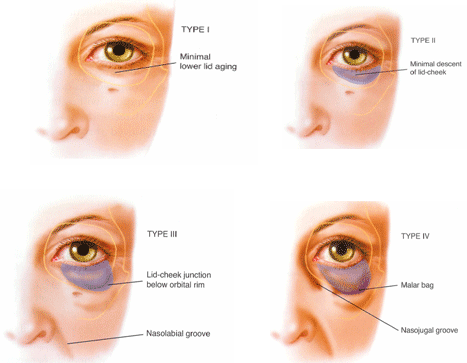
WHAT ARE TEAR TROUGHS?
The skin of the eye area is very sensitive and fragile, easily revealing the signs of fatigue or age. Eye circles appear first at the corner of the eye and then spread on the contour which makes the eyes sad and tired. The circles can have different origins: fatigue, deficient microcirculation, unhealthy lifestyle, and they are often hereditary. They are a common concern for men and women. From the age of 30 more than 50% of women are concerned by eye circles (from an Arcane study done in France in Feb 2011 on 4402 women).
WHY DO I HAVE THEM?
As we age, there are gradual changes taking place in our faces and especially around our eyes. The changes happen in all the layers of the face, including skin, fat, muscle, and bone. In youth, due to the surrounding plump fat, thicker overlying skin and soft tissue surrounding this structure, this ligament is usually invisible. Firstly the delicate skin around the eyes is vulnerable to sun damage and can develop fine lines and wrinkles and become “crepey” in texture. There is a natural slow decrease in fatty tissue under the lower eyelid and upper cheek area. The muscles of the lower lid slowly lose elasticity and no longer remain tightly tethered in place. Also the cheekbone and eye socket shapes are slowly receding over time to result in a lack of bony support for the skin. The rates that these changes happen vary a lot in different people, and are also linked to smoking, stress, skincare, sun exposure, body weight, and genetics. These changes can eventually cause the tear trough depression to become puffy or bulge away from the face (pseudo herniation of the infraorbital fat pads). When the tissue under the eye pushes outward, ‘bags’ begin to develop. The unevenness of the area can become shadowy, which in turn will look like ‘dark circles’ under the eyes. No matter how much makeup is worn, the face can still looked exhausted and drawn.

WHAT CAN YOU DO TO HELP?
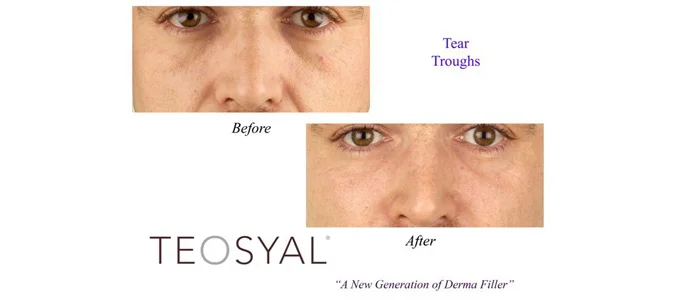
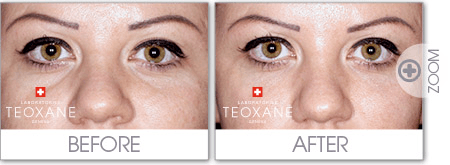
Using tiny injections of hyaluronic acid injectable gel specially designed to treat the delicate and sensitive eye circle area, a significant improvement for tear troughs can be achieved. Hyaluronic acid is a molecule naturally present in the dermis giving hydration, elasticity and firmness to the skin. The gel will gently fill the tear trough depression, making it look smoother and healthier. With the area no longer sunken, the dark ‘circles’ are reduced, as the thin skin in this area is highly reflective and shadowing is reduced when the hollowness is corrected with fillers. Best of all, the results from this treatment will be immediate.
This treatment is not suitable for pigmented dark circles neither for large malar and palpebral bags, those last ones being better suited to surgery.
WHO DOES THIS TREATMENT WORK FOR?
Men and women with eye circles, especially in patients in their late 30’s to 40’s, to essentially fill out the trough. Commonly in this age group, the loss of volume at the junction between the upper cheek and lower eyelid, i.e. a worsening tear trough deformity, is the only obvious sign of ageing. Therefore simple replacement of this lost volume without the need for surgery can lead to dramatic improvement.While tear troughs normally appear in the 30s or 40s, people as young as 20 may begin to notice this early sign of aging.
The ideal candidate for tear trough correction is anyone who understands the procedure, is in generally good health, and holds realistic expectations for their results.
WE PREFER TEOSYAL REDENSITY II - EYES
After 9 years of research and clinical trials, Teoxane Laboratories in Geneva introduced a brand new product to the aesthetic medicine market, specifically developed to treat the difficult and sensitive area around the eyes. Redensity II [eye] is an injectable gel specifically adapted to treat the undereye hollows and tear trough. It is a fully transparent viscoelastic gel and just slightly hygroscopic (i.e. it attracts very little water resulting in minimal or no swelling after injection). The viscoelasticity is perfectly designed to coat the undereye hollows safely and durably and assures an easily spreading and controlled positioning of the gel.
Can other dermal fillers be used to treat them? Yes – but not as well, and not for as long. Other fillers are much more likely to migrate with time towards the inner part of the tear trough leading to the appearance of a lump. Teosyal Redensity II doesn’t form lumps.
Teosyal Redensity II is the ONLY Aesthetic injectables product in the UK licensed for the treatment of tear troughs.
HOW DOES IT WORK?
What’s involved in treatment? The treatment involves 3 or 4 injections under each eye. The formulation of Teosyal Redensity II includes lidocaine, an anaesthetic ensuring optimal comfort throughout the injection session. We also use an ice pack to keep the swelling to a minimum. It takes around 5 minutes to complete each treatment.
There may be some discomfort during treatment, either when the injection takes place or during the massage that ensures a smooth contour, although many patients find it relatively pain-free.
Occasional contour irregularities can occur but, once any swelling has subsided, you can massage any tiny lumps with your thumb or index finger to flatten out any unevenness.
There may be some bruising and/or mild swelling but these normally disappear in around a week.
ANY SIDE EFFECTS?
Teosyal's Redensity II [eye] is a second generation dermal filler which has been exclusively formulated for the undereye area. Significant side effects are extremely uncommon but may include:
• Injection-related reactions: These reactions may include redness at the injection site immediately after the treatment.
• Bruising: Occasionally bruising can occur.
• Contour irregularities can and do occasionally occur. Massaging can usually smooth out any 'lumpiness' however if persisent the filler can be easily and rapidly dissolved.
• Infection - as with all injections, this procedure carries a risk of infection. The syringe is sterile and standard precautions associated with injectable materials are taken.
• Swelling - unlike the use of generic dermal fillers for tear trough treatment, the use of Redensity II [eyes] results in only very minimal or no swelling at all.
HOW LONG DOES IT LAST?
The results with Redensity II [eyes] are visible immediately and typically last on average 12 months (clinical evaluation on 67 clients followed up after 1 ear) although the exact length of time will depend on the structure of your skin and other factors such as lifestyle, age and the degree of perfection demanded by you. Additional touch up treatments can be performed at any time after the initial treatment.
HOW MUCH DOES IT COST?
We charge €450 for 1ml of Redensity II (Eyes). Although 1ml is the recommended dose by the manufacturer, more is sometimes given during a second procedure, best carried out at least one week after the initial treatment. Around 25% of patients seem to choose to get a 2nd ml of this product. If this second treatment is given within 1 month of the 1st, a reduced price of €350 will be charged for the second syringe.
IS IT REVERSIBLE?
If you are unhappy with the result, the filler can be easily and rapidly dissolved with an injection of hyaluronidase.
Contact us at (021) 484-3444 or driz@lkaesthetics.com to book a free consultation.
Further Reading

Lip Enhancement Q&A
Lip Enhancement - your questions answered

LIPS & DERMAL FILLER
These days, an injectable dermal filler is the most commonly used method of lip augmentation.
There are many types of dermal fillers that can be injected in your lips and around your mouth. But the most common fillers today are products that contain substances similar to hyaluronic acid. Hyaluronic acid is a natural substance found in the body. It helps increase volume in your lips.
These types of dermal fillers are sometimes called "hyaluronic acid fillers."
Hyaluronic acid fillers can improve the appearance of your lips by adding:
Shape
Structure
Volume
HOW MUCH DO I NEED?
We use Belotero Lips which is a unique dual dermal filler approach to lips. It gives a customised natural enhancement to your lips. The first filler (0.6ml) outlines, contours and shapes (like a lip liner) and the second filler (0.6ml) adds volume where it is needed. A single product is often not versatile enough to deliver the natural, personalized result that most people are looking for. One size definitely doesn’t fit all.

WHAT HAPPENS WHEN I GET MY LIPS DONE?
At the beginning of the procedure, it feels like a pinch and then it stings as the filler is being injected. Afterward, Dr. Kelleher will massage your lips a little, ice them for 10 minutes, and then let you go about your day.
You can choose to have your lips numbed beforehand with a dental nerve block or a topical aesthetic. Dr. Kelleher can numb the area around your lips with an injection into your gums (a standard dental injection) or you can opt for a numbing cream.
You will see the results almost immediately. Your lips will be a swollen at first but you'll see the effects of the fillers pretty quickly. Give your lips 24 hours to settle and the swelling to calm. Then you'll be seeing your filled-out lips as they will be for the next few months.
Some slight bruising and bleeding at the site of injection is normal and expected. The bruises should fade after five to seven days.
IS IT RIGHT FOR ME?
You might want to try lip fillers, which add or restore fullness to your lips, because:
your lips have lost definition over the years;
you’re tired of using makeup to enhance your pout and want something longer lasting;
you think that a more defined smile and shapelier lips would suit your face better.
ANYTHING ELSE I NEED TO KNOW?
Ten days prior to your procedure, avoid painkillers (except Tylenol), fish oil, and vitamin E, which tend to thin the blood. Thinner blood will make the area more prone to bruising and bleeding.
HOW MUCH DOES IT COST?
Belotero Lips is a premium lip enhancement using 2 different dermal fillers. It costs €400 for 1.2ml. We also offer standard lip filler using Teoxane kiss 1.0ml for €350.
HOW LONG DOES IT LAST?
HA fillers last about four to six months. But if your body is on the thinner side, you'll metabolize the formula faster and the injections won't last as long.
WHAT IF I DON'T LIKE IT?
You can completely erase HA fillers if you don't like how your lips turn out for whatever reason. Because HA is not permanent, we can inject an eraser enzyme called hyaluronidase. The enzyme will dissolve the filler in five minutes if you're unhappy with the initial results.

The perfect lip formula - Natural is better
What do the sexiest female lips look like? There's a formula for that
What do the sexiest female lips look like? There's a formula for that

Focus groups deemed the upper to lower lip ratio of 1:2, far left, to be the most attractive on white women. The ratio of 2:1, far right, was considered least attractive.
This formula of attractiveness was published in February 2017 in JAMA Facial Plastic Surgery (see below for link to study). Only images of young Caucasian women were used in this paper so that the study could be compared to previous research, which has often focused on college-age women of Northern European descent. The study was conducted by the University of California Irvine.
Key Points
Question
What lip dimensions are the most attractive in white women?
Findings
All 100 faces were cardinally ranked by 150 individuals in phase 1, and all 60 faces were cardinally ranked by 428 participants in phase 2. In a survey of attractiveness, an increase of 53.5% in the total lip surface area with a linear dimension equal to 9.6% of the lower face and an upper to lower lip ratio of 1:2 was found to be the most attractive.
Meanings
These findings indicate a quantifiable approach to determining the most attractive lip proportions used in augmentation procedures.
So, when it comes to white women, the study showed the most attractive mouth has an upper lip that’s half as big as the lower lip. This 1:2 ratio goes against the current trend of aesthetic patients favoring a visibly fuller upper lip.
The study highlighted a trend, we have noticed patients asking for in practice, towards this look that aesthetically is overly filled and disproportionate.
Focus groups found a more natural result to be more appealing, but some celebrities are trying to create a trend that violates that aesthetic.
For the study, a computer created “synthetic morph” composite images based on photos of women 18- to 25-years old. Those images were then manipulated to show various lip dimensions on the same face. Focus groups weighed in on which faces they found most attractive.
The final verdict?
The most appealing lips on white women had
a surface area that was about 50 percent bigger than the women’s natural mouth size
took up about 10 percent of the lower third of their face
had that magic upper to lower lip ratio of 1:2.

Models Miranda Kerr and Alessandra Ambrosio fit the ratio well, said Natalie Popenko, co-author of the study.

What have we learned from this study? (4)
1. There is such a thing as too much when it comes to filling the lips
2. Proportions and lip ratio must be respected
3. Balance of the lip region must be maintained
The changing face of lips
We are aware that well-defined and full lips suggest youth and attractiveness and that lips are very important to overall facial appeal with lip procedures very popular no matter the age or demographic of the patient.
We also know that a record number of people are undergoing lip augmentation procedures. (There were 27,449 lip implants performed in 2015 in the U.S., making it the second-fastest growing facial procedure since 2000).
It's obvious that the number of Lip injections will continue to increase at a fast pace. Anecdotal evidence suggests the popularity is partly down to “the age of the selfie.”
We are also cognisant that
significant differences in defining beauty exist across the ages and cultures (2)
significant differences in perception of facial attractiveness has been documented between lay-people and professionals (3)
As we encounter ever changing requests from our patients, we must respect different concepts of beauty without abandoning the ratios of the aesthetic ideal.
We use Belotero Lips dual system for natural, realistic, attractive lips that suit you. Two different fillers, one to outline and contour and one to add volume. A single product is often not versatile enough to deliver the natural, personalized result desired. 1.2ml dermal filler in total.
Call (021) 4843444 for a free consultation with Dr. Kelleher
Studies and further reading
1. A Quantitative Approach to Determining the Ideal Female Lip Aesthetic and Its Effect on Facial Attractiveness
Natalie A. Popenko, MS1,2; Prem B. Tripathi, MD, MPH1,2; Zlatko Devcic, MD1,2; et alKoohyar Karimi, DDS1,2; Kathryn Osann, PhD, MPH1,2; Brian J. F. Wong, MD, PhD1,
JAMA Facial Plast Surg. 2017;19(4):261-267. doi:10.1001/jamafacial.2016.2049
2. The Ideal Buttock Size: A Sociodemographic Morphometric Evaluation.
Heidekrueger PI1, Sinno S, Tanna N, Szpalski C, Juran S, Schmauss D, Ehrl D, Ng R, Ninkovic M, Broer PN.
Plast Reconstr Surg. 2017 Jul;140(1):20e-32e. doi: 10.1097/PRS.0000000000003439.
3. Influence of Smile Arc and Buccal Corridors on Facial Attractiveness: A Cross-sectional Study
Shashank Gaikwad, Harsimran Kaur, Anna C Vaz, Baldeep Singh, lavina Taneja, KS Vinod, Prateek Verma
JCDR - Year : 2016 | Month : September | Volume : 10 | Issue : 9 | Page : ZC20 - ZC23
4. Defining the Perfect Mouth
Catherine P. Winslow, MD
JAMA Facial Plast Surg. 2017;19(4):268. doi:10.1001/jamafacial.2016.2263

Lips - Fast Facts
Lips Fast Facts: Exercise, kissing, products used, time needed...

Belotero Lips
Every doctor has a favourite formula or product they like to use. We use Belotero Lips, a unique dual filler approach. A single product is often not versatile enough to deliver the natural, personalized result most people want.

Exercise
You shouldn't exercise the day of the procedure. You especially should avoid activities that increase blood flow to your face, like getting a massage or a facial.

Downtime
There's very little downtime. The procedure takes about 15 to 20 minutes total and the numbing will start to wear off after about 15 minutes. You can go about your daily life afterward but shouldn't make any big plans (like a wedding or an important event) for at least three days in case you bruise.

Kissing
If done correctly, lips with injections don't feel any different than real lips. Not even when you're kissing.

Natural is Best
Don't expect to get Angelina Jolie's lips. You can bring in inspiration photos, but ultimately, you and Dr. Kelleher should decide what look is best for your face. You should also expect to increase the size gradually over time — not all at once — for the most natural results.

Lip Types
What are the standard lip augmentation types?

Classic
The Classic lip augmentation is subtle but provides a distinctive formation of all the natural 5 planes of the lips. Women who have lost volume through aging and those preferring a subtle augmentation chose this style.

Pearlique
The pearlique style accentuates the lower lip. This style is opposite the cupid style. By accenting the two teardrop shapes, a more youthful, voluminous effect is achieved. Since Pearlique is isolated to the lower lip, it can be combined with other looks. Perique complements Cupid and Rubina very well.

Hollywood
The hollywood style focuses on full expression of the upper lip and little to no augmentation of the lower lip. The aesthetic result comes from maintaining a symmetrical balance. This style is popular among movie personalities. This style is for people who want attention on their lips without a full presentation of both lips. This style potentiates all three forms of the upper lip (two tapering rhomboid shapes, and the half bucket in the middle of the upper lip).

Cupid
Cupid is the rarest of all lip forms. It enhances those lips that project a strong Cupids Bow form. Adding volume to such lips accents the natural appearance and results in a sexy full shape.

Rubina
The Rubina lips are the full expression of the natural 5 planes of the lips. This means that any more product placed in the lips will distort these forms and will not be aesthetically pleasing. Rubina lips are heavily dependant on the facial structure of the woman wanting the look. If you have enough length to your face from the bottom of the nose to the chin then this can be a very attractive style.

Bruxism
Severe Bruxism can result in headaches, earaches, facial pain, chipped-teeth, damage to or fracture of crowns and fillings and may enlarge the masseter muscle, giving rise to a square face and wide jawline.
The pressure on the teeth during grinding can be 20 times greater than the force...
ALSO KNOWN AS TOOTH CLENCHING AND GRINDING (TEMPORO-MANDIBULAR DISORDER (TMD))
WHAT IS IT?
Bruxism is an oral "parafunctional activity" which means it is unrelated to normal function such as eating or talking. It is quite a common problem that afflicts a large percentage of people (somewhere between 10 and 30% depending on the source). Those that only grind at night won't even be aware of it, unless told by someone or their dentist notices that they are wearing down their teeth.
There are two main types of bruxism: that which occurs during sleep (sleep bruxism) and that which occurs during wakefulness (awake bruxism). Dental damage may be similar in both types, but the symptoms of sleep bruxism tend to be worse on waking and improve during the course of the day, and the symptoms of awake bruxism may not be present at all on waking, and then worsen over the day.
Awake bruxism is thought to have different causes from sleep bruxism, and is more common in females, whereas males and females are affected in equal proportions by sleep bruxism. Sleep bruxism is considered a sleep-related movement disorder. People who clench or grind their teeth (brux) during sleep are more likely to have other sleep disorders, such as snoring and pauses in breathing (sleep apnea).
The causes of bruxism are not known, but it is thought stress and anxiety may cause tension in the jaw, and that antidepressants may also be a trigger (1).
WHY IS IT AN ISSUE?
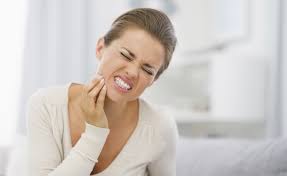
For people with mild Bruxism there maybe no real ill-effects or pain. Severe Bruxism can result in headaches, earaches, facial pain, chipped-teeth, damage to or fracture of crowns and fillings and may enlarge the masseter muscle, giving rise to a square face and wide jawline.
The pressure on the teeth during grinding can be 20 times greater than the force used in normal chewing and biting but interestingly, the amount of pain doesn't correlate with the severity of grinding or clenching that is occurring.
WHAT TYPE OF PAIN DOES IT CAUSE?
The pain in the muscles of mastication caused by bruxism is similar to muscle pain that occurs after exercise.The pain may be felt over the angle of the jaw (masseter) or in the temple (temporalis), and may be described as a headache or an aching jaw. Most (but not all) bruxism includes clenching force provided by masseter and temporalis muscle groups; but some bruxers clench and grind front teeth only, which involves minimal action of the masseter and temporalis muscles. The temporomandibular joints themselves may also become painful, which is usually felt just in front of the ear, or inside the ear itself. Clicking of the jaw joint may also develop. The forces exerted on the teeth are more than the periodontal ligament (tendons that hold the tooth to the bone) is biologically designed to handle, and so inflammation may result. A tooth may become sore to bite on, and further, tooth wear may reduce the insulating width of enamel and dentin that protects the pulp of the tooth and result in hypersensitivity, e.g. to cold stimuli.
SYMPTOMS
Signs and symptoms of bruxism may include:
Teeth grinding or clenching, which may be loud enough to awaken your sleep partner
Teeth that are flattened, fractured, chipped or loose
Worn tooth enamel, exposing deeper layers of your tooth
Increased tooth sensitivity
Jaw or face pain or soreness
Tired or tight jaw muscles
Pain that feels like an earache, though it's actually not a problem with your ear
Dull headache originating in the temples
Damage from chewing on the inside of your cheek
Indentations on your tongue
Enlarged masseter muscles
WHAT CAN WE DO?
Diagnosis is made after a thorough history and examination of the muscle groups of your head and neck.
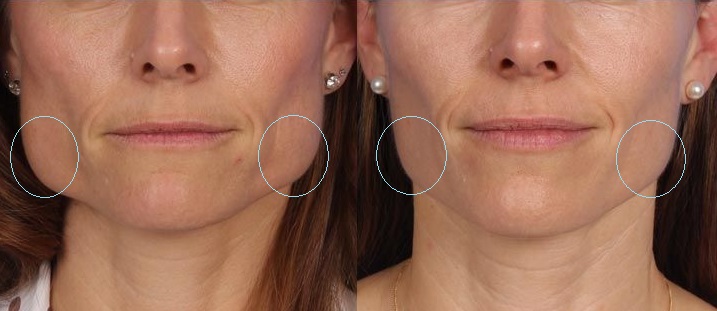
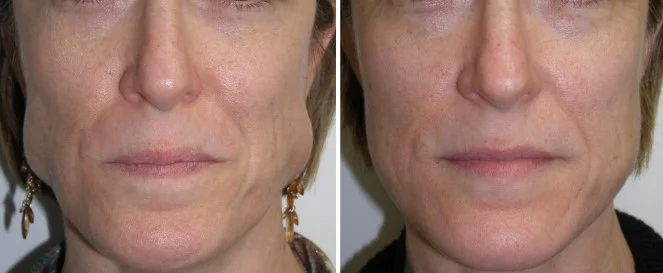
In addition, botulinum toxin can be used to target the muscle groups responsible, relaxing them and easing discomfort. This moderates the habitual tooth clenching and grinding and can have the added benefit of reducing muscle bulk and slimming the lower face.
The typical dose is 20 units of Toxin injections per masseter muscle and may help individuals with severe bruxism who haven't responded to traditional treatments, such as bite blocks that keep teeth from coming together at night.
WHAT PATIENTS WILL Toxin HELP?
Toxin treatment is not suitable for every patient. Care must be taken as to when to use it, how to use it, and who is a good candidate. There are times when muscles hurt even though they have not been overused. When life circumstances, emotions or thoughts cause your muscles to tighten and ultimately ache, then Toxin injections for TMJ will not likely help. Instead, counseling, talk therapy, cognitive behavioral therapy, may be better options.
If you’re considering Toxin as part of your treatment for TMJ problems, jaw pain, pain in or around your teeth, or because of a change in the shape of your jaw - see if you fit into the following categories.
If You Currently Wear a Night Guard- If you currently wear a night guard and still have morning symptoms of muscle pain or tightness, joint noises, locking, and/or pain, you may be a good candidate for Toxin. This is particularly true if you find yourself biting hard on the guard when you wake up in the morning. Keep in mind however, that Toxin will be most helpful if you continue to wear your night guard. Two strategies are better than one in this scenario.
If You Can’t Tolerate A Night Guard- If you cannot tolerate a night guard (and have tried various types, with your dentist’s guidance) Toxin injections for TMJ may provide meaningful benefit.
If Your Jaw Muscles Are Too Big- If your jaw muscles are just too big and visibly over-built, Toxin may be an option. One of the predictable things that treatment does is reduce muscle bulk when used over time. It has been shown to be effective in producing a flatter and more natural-looking profile. You will likely need three sessions in three-month intervals to achieve the best results. However, jaw bulk may creep back if the reasons your muscles become larger have not been identified and dealt with.
WHAT CAN I EXPECT AFTER TREATMENT?
Results from treatment of bruxism start after about a week and improve as the masseter muscles shrink over the following few treatments.
The treatment does not interfere with chewing, smiling or anything else, because the injected dose of Botox is relatively small, but big enough to stop the cycle of bruxism.
WHAT DOES IT COST?
Dr. Kelleher charges €350 for Bruxism treatment. It requires 40-50 units depending on severity of the problem. A consultation (free) is necessary to assess whether you are a suitable candidate for treatment.
ANY OTHER BENEFITS?
It should be noted that our patients treated for teeth grinding have also reported a marked reduction in their general stress level.
FURTHER READING
Ayes Milanlıoglu Paroxetine-induced severe sleep bruxism successfully treated with buspirone. Clinics (Sao Paulo). 2012 Feb; 67(2)
Persaud R, Garas G, Silva S, Stamatoglou C, Chatrath P, Patel K (February 2013). "An evidence-based review of botulinum toxin (Botox) applications in non-cosmetic head and neck conditions". JRSM Short Reports. 4 (2)

Better Together
A growing trend in aesthetic medicine is for a combination therapy approach to rejuvenation and correction, and Anti Wrinkle Injections and Dermal Fillers are one such winning combination.
Elanamie COMBINATION THERAPY
- A WINNING FORMULA from €600
A growing trend in aesthetic medicine is for a combination therapy approach to rejuvenation and correction, and toxin and fillers are one such winning combination. The latest research has found that the two procedures have equal applications, but together, they can produce a synergistic effect that last longer and looks better (see research papers below).
The key ingredient is comprehensive facial analysis. We have unique faces, skin, musculature and wrinkles. We all age differently. One size, emphatically, does not fit all.
Don't get caught up with "number of units" and pricing per area. We feel that can be too crude a metric for a medical procedure on your face.
25 units of Toxin injected into one face or one area is entirely different from 25 units of Toxin injected into the right spots for you.
Many of the changes that have taken place in approaches to facial rejuvenation have come about because of increased understanding of facial aging, expansion in the numbers and types of products available, and associated refinements in aesthetic goals—specifically, providing a balanced, harmonious, and natural look.
Neurotoxins, work on the underlying muscle structures under the skin. The muscles not only provide movement, but affect our facial positioning and expressions. Certain large muscles such as those in the jawline, around the lips and eyes, as well as the forehead areas, can change the entire facial structure noticeably. Deep frown lines can make a person look permanently angry, while pronounced jaw muscles can give someone a belligerent or argumentative demeanor. Proper usage of Toxin not only relaxes the facial expression, but also can give a more pleasant, uplifted look.
Dermal fillers work hand in hand with Toxin to restore fullness to areas that are sunken or lined, and also help to reshape and redefine the overall facial structure. By combining fillers with Toxin, the volume of both substances can be reduced to achieve a more natural, harmonious look.
Many patients find that in areas of the face that are in constant motion, such as in the mouth area, fillers do not last very long, as the muscle motion works to break up the fillers faster. A combination treatment including Toxin decreases muscle activity, so that the Fillers are not broken down so quickly.
The synergistic effect of Toxin and Fillers is such that the combination of both is better than either treatment alone, and it has been theorized that effects of this dual-treatment lasts longer because the collagen production stimulated by fillers help the skin to form correctly in a way that muscle movement would have disturbed.
At Elanamie Clinic we use vials of Dermal Filler with a sprinkle effect of Anti Wrinkle injections and have four very popular combinations. The type of Dermal Filler used is decided in the consultation after a facial assessment as many factors determine which fillers or combination of fillers are ideal.

Elanamie REFRESH PACKAGE €600
This uses a standard ampoule of Dermal filler (1.0ml) and an average of 30 units of Anti Wrinkle Injections drugs. We use the Toxin where needed as support for the Dermal Filler as opposed to being tied to particular areas. This is appropriate for moderate lines. It works to give support at a deeper level to smooth out lines. The Toxin reduces the muscle action to allow the filler to last longer and stay in the correct position. The Dermal Filler part lasts 9 months approximately and the Toxin needs to be topped up on average at 4 months. The facial analysis at consultation is vital to get the ideal treatment combination designed specially for each client.

Elanamie REFRESH Radiesse PACKAGE €650
Radiesse Dermal filler (1.5ml) and an average of 30 units of Toxin. This does not include specialised treatments (e.g. Lips and Under-eye). We use the Toxin where needed as support for the Dermal Filler as opposed to being tied to particular areas. This is appropriate for moderate lines. It works to give support at a deeper level to smooth out lines. The Toxin reduces the muscle action to allow the filler to last longer and stay in the correct position. The Dermal Filler part lasts 9 months approximately and the Anti Wrinkle injection needs to be topped up on average at 4 months. The facial analysis at consultation is vital to get the ideal treatment combination designed specially for each client.

Elanamie REFRESH ULTIMATE PACKAGE €850
Dermal filler (1ml x 2) and an average of 40 units of Toxin. This does not include specialised treatments (e.g. Lips and Under-eye). We use the Toxin where needed as support for the Dermal Filler as opposed to being tied to particular areas. This is appropriate for deeper, more persistent lines and supporting volume loss in particular areas of the face. The Toxin reduces muscle action to allow the filler to last longer and stay in the correct position. The Dermal Filler lasts 12 months approximately and the Toxin needs to be topped up at 4 months, on average. The facial analysis at consultation is vital to get the ideal treatment combination designed specially for each client.

Toxin as an Antidepressant?
There have been a couple of recent studies that suggest that neutralising key facial muscles with Anti Wrinkle Injections can reduce the symptoms of depression.
There have been a couple of recent studies that suggest that neutralising key facial muscles with Toxin can reduce the symptoms of depression.
In a recent 24-week randomized double-blind placebo-controlled study, done by Michelle Magid, MD, clinical associate professor of psychiatry at the University of Texas, 30 participants with depressive symptoms were randomized and given injections of Botox or a placebo between the eyebrows.
The men were injected with 39 units of botulinum and the women were injected with 29 units. At week 12, the placebo group crossed over to treatment, and the treatment group crossed over to placebo. Participants were evaluated at weeks 0, 3, 6, 12, 15, 18, and 24. The primary outcome was a reduction from baseline of at least 50% in the 21-item Hamilton Depression Rating Scale score.
In a study in the in the Journal of Psychiatric Research, Eric Finzi, a cosmetic dermatologist, and Norman Rosenthal, a professor of psychiatry at Georgetown Medical School, randomly assigned a group of 74 patients with major depression to receive either Botox or saline injections in the forehead muscles that enable us to frown.
Six weeks after the injection, 52 percent of the subjects who got Botox showed relief from depression, compared with only 15 percent of those who received the saline placebo.
These studies are part of a growing body of research that seems to show that neutralising the muscles that allow us to express unhappiness and sadness brings relief to some people with depression.
I think it’s great that researchers are looking for alternative uses for Botox, such as relief for people who suffer from migraine headaches and depression.
The facial feedback hypothesis isn’t new. It goes back to Charles Darwin, who believed the “outward signs of an emotion intensifies it” and “the repression, as far as this is possible, of all outward signs softens our emotions.” The psychologist William James agreed: “Refuse to express a passion, and it dies.” The idea is that you’re not just frowning because you’re sad; you’re also sad because you’re frowning. Emotions aren’t emotions at first; they’re thoughts, and the physiological reactions to those thoughts shape and magnify how we feel.
In the 1970s, psychologist James Laird performed a clever experiment: He tricked people into animating smile muscles or frown muscles without implying any sort of emotion, and they reported feeling happier when a smile was enacted, and sadder when a frown was. In regular life, the free expression of emotions increases the strength of the feeling. Conversely, reducing the expression is one way of reducing or perhaps even completely halting a feeling.
There is also the common-sense theory that if you’re not frowning more people will want to talk to you. As David Matsumoto, a professor of psychology at San Francisco State University and a renowned expert in expression, says, “If your expression changes, then of course how people are perceiving you will change.”
While all of the above is good news, the importance of facial expressions should not be underestimated as we relate to each other and empathise with each other. At LK Aesthetics we like to consult with the patient and really see how they express themselves and see what should be preserved as intrinsic to how that person communicates with their face. As in all things, everything is good in moderation.
In this instance as a subtle tool we would leave all of your other facial expressions and muscles as-is and concentrate on the Glabella lines (frown lines) between your eyes.

Do I need Anti Wrinkle injections or Dermal Filler or Both?
This is actually a common question that comes up during cosmetic consultations. Anti Wrinkle Injections and Dermal Fillers are both injected into the skin, but they do completely different things....
Do I Need Anti Wrinkle injections, or filler, or both?
This is actually a common question that comes up during cosmetic consultations. Neurotoxins and fillers are both injected into the skin, but they do completely different things. Sometimes a patient only needs one or the other, but they commonly work very well together to achieve the desired effect.
There are two types of wrinkles Dynamic and Static. What kind of wrinkles you have dictates the best treatment option.
Dynamic Wrinkles usually = Anti Wrinkle injections
Botox is just one of the three FDA-approved neurotoxins. The other two are Dysport and Xeomin. We will refer to them generally as Anti Wrinkle Injections (AWI).
Dynamic wrinkles, lines that are present when you smile or squint, but go away when you relax your face, tend to respond best to AWI drugs. The drug temporarily impairs the nerve functioning of the muscle it's injected into. The relaxed muscle is then unable to produce the movement that results in wrinkling of the skin. Examples of dynamic wrinkles in the forehead are the "11" lines and the horizontal lines that are prominent with frowning and other facial expressions.
AWI neurotoxins are effective for about 3 to 4 months.
Static Wrinkles usually = Filler
Static wrinkles are those that are visible when the face is relaxed and at rest.
As people age, the dermal layer of the skin becomes thinner. The loss of elasticity and fullness is manifested in static wrinkles. To complicate things, dynamic wrinkles can also eventually become permanent and no longer disappear when the face is relaxed.
Dermal fillers can help eliminate these types of wrinkles by adding volume to the dermal layer.
So, Fillers do just that– they “fill.” They replace volume where volume is lost. You’d be surprised how much collagen and even bone has already been lost in a 30-year old face.
This plumps up the tissue, returns it to a state similar to that of youth and pushes out the creases.
Advanced dermal fillers include Ultradeep, RHA3 & 4, Belotero, Radiesse etc. Although each dermal filler has unique attributes, in general, most dermal fillers work in two ways. First, most of the fillers plump and lift the skin gently to replace collagen loss caused by the natural aging process. Secondly, most of the fillers also stimulate the body to produce its own natural collagen; some help more than others. Injections of fat are also used as fillers. The duration of results and possible side effects vary with the type of filler used.
Some fillers can be injected directly into wrinkles, like the smile lines between the nose and mouth. However, Dr. Kelleher finds that the best use of fillers is when they are used to sculpt the face rather than just fill. That’s where the art of medicine comes into play. In our younger patients, we use them to define the cheekbones, strengthen the jawline, and gently enhance the lips. In our older patients, we use them to “lift” more than to fill. With the right filler placed strategically in the right places, one can achieve a “liquid” face lift.
The effects of most fillers are nearly instantaneous. Most of the dermal fillers last from several months to a year or two before touch up treatments are necessary to extend results.
The answer!
Whether Anti Wrinkle injections or dermal fillers is the right choice for you will depend upon the positioning of your facial muscles and the type of wrinkles you have. In some cases a combination of the two is needed to smooth away both static and dynamic wrinkles. Also, the muscular structure of the forehead in some people may predispose them to unwanted side effects, such as eyelid drooping. With so many different factors to consider, it's important to discuss your treatment options with Dr. Kelleher so you can agree on the best treatment plan for you and your wrinkles.


Follow these links for more information on any particular area

When is the Right Age to Start Anti Wrinkle Injections?
How about Eight?
I think we can all agree that that is as ridiculous as it sounds.
This is apropos of a recent furore surrounding a woman who gave an interview...
How about Eight?
I think we can all agree that that is as ridiculous as it sounds.
This is apropos of a recent furore surrounding a woman who gave an interview to 'The Sun' and appeared on 'Good Morning America' to say she had given her eight year old Botox injections to give her a competitive edge in beauty pageants….
Child protective services, rightly, became immediately involved. She’s now claiming that the whole thing was a hoax and she did it for the money both the Sun ($200) and GMA ($10,000) paid her. Either way, she’ll have a tough time arguing to get her daughter back.
Anyway….back to the point…The short, quick answer to the Botox question, if you are in a hurry, is:
There is no right or wrong time to start, if indeed you should start it at all.
It is a cosmetic procedure and it is completely elective. As a result, It is a very personal decision.
Interestingly, patients typically start treatment around the ‘crises years’ (29, 39, 49). It is the time people take stock and reflect on their lives or panic, depending on their disposition. They think about where they are, where they hoped they would be at this time in their lives and where they want to be in the next decade. How they look also gets a little attention...
““I will never be an old man. To me, old age is always 15 years older than I am.”
”
Everybody ages differently. If you smile, frown, or make any expression with your face (even squinting at the sun), you will develop laugh lines, brow lines, lines across your forehead, lines around your eyes, etc. They're a fact of life, and although there are ways to minimize them, we will all get them eventually.
Not all of us get all the lines in quite the same way or at the same age though. Genetics has a lot to do with that. Look at your parents: do they have any lines when their faces are a rest? Where are they? How many? How do they compare to their peers in terms of signs of aging? There is no avoiding your genes!
We usually associate the use of Anti Wrinkle Injections with people in their 40s, 50s and 60s attempting to fix wrinkles and folds once they’ve developed. But that has all changed. Ridiculous stories about eight year old’s aside, there is a growing movement towards preventative cosmetic procedures as the products and treatments become more mainstream and generally accepted.
There is a growing school of thought that suggests that, by injecting earlier, people can keep lines from ever happening. That seems like a stretch to us and also doesn't sound very desirable. After all I love my wrinkles - just not all of them ;-).
This broadening of the market reach is not unexpected. Every generation embraces new tools and techniques to make themselves look and feel better. From the innovators, through the early adopters all the way to the laggards, new tools in our arsenal for looking well follow the age old (pun intended) path towards widespread use. My granny’s generation were fond of the blue rinse and a wash, set and blow dry on Fridays. (Interestingly, now back in fashion with edgy short cut grey hair).
Also, Teeth whitening, unheard of 20 years ago, has become the most requested procedure in cosmetic dentistry today.
We adapt.
The argument for Prejuvenation
Anti Wrinkle Injection use in younger people is described as preventative use of cosmetic procedures, or “prejuvenation” if you want a trendy term. Those that subscribe to this theory argue that it’s easier and more effective to inhibit progression than come in 10 years later and take them away. An ounce of prevention and all that…
They argue that if you slow down the use of these muscles beginning early in adult life, the lines never develop. Rather than going backward and fixing something that’s there, you can inhibit it from starting in the first place. Akin to getting your teeth cleaned professionally to stop plague build-up and subsequent gum disease and hopefully ever having a filling, perhaps?
AWI preventive aspect was proved in Beverly Hills plastic surgeon Dr. William J. Binder's groundbreaking 2006 twins study, where he injected one identical twin with the toxin for 13 years (from the age of 25). The result? The treated twin looked at least five years younger, in spite of living in sun-damaging Malibu (her sister lived in Munich). (We have included details of this study at the end of the blog).
Where do we stand her at LK Aesthetics head quarters?
Firmly in the middle!
We feel patients should wait until the lines actually show up but not so late that they have moved in permanently. The wrinkles should be there when your face is at rest. When exactly that happens is nature’s lottery.
How many wrinkles you have depends on your skin type and how much you move your face. Thinner complexions- typical for women with lighter hair, eyes, and skin tones - will develop more lines, faster. That pretty much sums up the Celtic complexion. Oh joy...
Pragmatically speaking, for early lines, AWI is very effective in softening them almost completely after the first session and the results tend to last a relatively long time. So based on the effectiveness, it would make little sense to try and prevent something that is easily treated and not yet present. However, once a line is more “etched” it may take several treatments to soften it.
In your late teens and early twenties there are much more obvious ways to keep your skin healthy and to prevent early onset of wrinkles. For the average person to start using Anti Wrinkle Injections in their early twenties is overkill.
These are the things you should be concentrating on.
Use Sun block -sun exposure is cumulative. 5 mins a day is enough to break down collagen. We will discuss this further in a later blog.
Stay Hydrated – water, water and more water (even after they start charging us for it)
Don’t Smoke. At all. Ever. If you do –stop.
Get enough sleep – self evident but I may explore exactly what that means later.
Good Diet – I’ll blog on that one too
Use the best ingredients on your skin that you can afford – See ZO Skin Health medical grade skincare
Some patients who are in their early 20s and already have etched-in wrinkles, whether it is because of strong facial muscles and excessive sun exposure [or something else].
If you begin using AWI and fillers in your 20s, creases and wrinkles will be slower to develop. That doesn't mean they won't, it just means they will take some more time to show. Also, since these fillers are only temporary, you're signing yourself up for a lifetime of repeat treatments, at several hundred euros a treatment, along with gym membership, laser hair removal and hair colouring.
But the truth in today’s market is that people are prepared to do just that. More than 50% of our clients are <40 years old.
We can all agree that frown lines, forehead furrows and crows’ feet are due to repetitive folding of skin from normal expressions. What we would suggest is at whatever point people begin to notice or (more importantly) are bothered by some of these things like frown lines or forehead lines … it’s reasonable to consider starting treatment to come in for a consultation so you can learn more about it.
There are no ‘shoulds’, ‘Musts’ or ‘have to’s”
If you’re thinking about Anti Wrinkle injections, the best time to start is when the lines on your face are minimally visible. You’ll get the maximum benefit if you start before you’re deeply wrinkled.
It’s never too late to start though. You haven’t missed the boat. You have your own idea of how you should look and what age you would like to be.
Once wrinkles are deep AWI can help soften them, but it won't eliminate them.
Now some people are lucky and don't get lines and wrinkles until later on in life, so yes, for some, it is too early to have treatment in their 30s or early 40s. But by the same token, some people may have lines develop in their late 20s, so treatment would be appropriate for them if they are bothered by them.
AWI are not for everyone, but if you have wrinkles that bother you, it could be for you.
At no point are we proposing a frozen look or starting treatment before you are emotionally or financially ready.
Where do I start?
Everyone has things they love about themselves and also they have their pet peeves. Starting early on the frown prevents wrinkles developing, but the jury is out on the forehead and eyes. The frown is a larger muscle, compared to muscles in the eyes or the forehead. The benefits of starting early on the frown can be obvious.
We recommend, you try treatment in one small area first, and if you like it, you can try it again. Treatment for younger patients is often called ‘Baby Botox’ or the ’Sprinkle Effect’ (just to help you in your google searches…). This is a diluted dose that will get rid of little wrinkles but won't leave the patient expressionless (or no more than usual – we can’t add any –sorry).
I am an advocate of Anti Wrinkle injections as long as it is used in the right circumstances, on the right person with the right understanding, and to achieve the right result.
I liken receiving AWI to taking solpadeine when you have a headache. You take a little when you need it as opposed to a daily event. It works as it should and provides relief. It is not to be used as a crutch or to maintain your existence.
Don’t worry too much. You’re not making any long term decisions. Iit’s a temporary procedure (like changing your hair colour) if you don’t like it, it’s not going to be forever.
If you know you're somebody who's going in the direction of cosmetic procedures and you know that you're going to care about lines, then I say it's better to do it earlier than to wait and do it once these lines have etched into the skin.
Twins Study as promised...
Long-term effects of botulinum toxin type A (Botox) on facial lines: a comparison in identical twins.
http://www.ncbi.nlm.nih.gov/pubmed/17116793
OBJECTIVE:
To evaluate the presence of imprinted facial lines in identical twin sisters, one of whom had received botulinum toxin type A (Botox) treatment in the forehead and glabellar region regularly for 13 years and one of whom had not. Crow's feet were also compared.
METHODS:
One twin received Botox in the forehead and glabellar region (approximately 2 to 3 times each year over the past 13 years) and in the crow's feet (twice in past 2 years). Her twin received Botox only twice (in the forehead and glabellar region, 3 and 7 years ago).
RESULTS:
Imprinted forehead and glabellar lines were not evident in the regularly treated twin but were evident in the minimally treated twin. Crow's feet were less noticeable when the regularly treated twin smiled (even at 7 months after treatment) than when the minimally treated twin smiled. Untreated facial areas (eg, nasolabial folds) showed comparable aging in both twins. Neither twin experienced adverse effects.
CONCLUSIONS:
Long-term treatment with Botox can prevent the development of imprinted facial lines that are visible at rest. Botox treatment can also reduce crow's feet. Treatment is well tolerated, with no adverse events reported during 13 years of regular treatment in this study.

Restylane
Factsheet on Restylane...
Restylane is one of the newest injectable, non-surgical facial treatments designed to slow and hide the effects of aging. Restylane filler injections are composed of a clear hyaluronic acid-based gel that not only fills in lines and wrinkles in the face, but also adds moisture and lubrication to the skin, making it feel younger and more comfortable.
What is Restylane?
Restylane is a clear, non-animal-based, biodegradable gel that is composed of hyaluronic acid, which occurs naturally in the body. Originally developed in Sweden, Restylane filler injections are marketed in the Galderma, a leading pharmaceutical company that offers a wide range of other skin treatments. Restylane is created from tissue cultivated in a laboratory, and is an excellent alternative to other fillers such as collagen and Hylaform, which are both derived from animal products.
Candidates for Restylane Treatment
Restylane® requires only a few injections and no incisions or removal of tissue, so the risk of complications is quite low. That in turn means that almost anyone who would like to reduce the prominence of their facial lines and wrinkles can be a candidate for Restylane treatments. Those allergic to avian-based hyaluronic acid treatments can safely use Restylane, since it is derived from bacterial origins. Those with a history of allergy to bacterial protein, though, should not use the product.
General Restylane Treatment Requirements
Since Restylane treatment requires no incisions and involves a very easy recovery process, it is very rare for a potential patient to be excluded for medical reasons. Furthermore, patients who cannot use other hyaluronic acid treatments because of the bird proteins they contain can receive Restylane injections without risk of allergic reaction. A very small portion of the population may experience an adverse reaction to the bacterial proteins in Restylane®, so patients with a history of such problems should avoid using the product.
As with all cosmetic surgery procedures, it is generally a good idea to wait until after the age of 18 to undergo treatment, since the structure of the face will continue to change throughout adolescence. In addition, qualified patients will have a sound understanding of the possibilities and limitations of the therapy, along with a mature understanding of the risks associated with Restylane. Those who meet these requirements and have facial wrinkles they'd like to see diminished are good candidates for the procedure.
What areas can be treated with Restylane?
Virtually any area of facial skin can be treated with one of the various Restylane dermal fillers. Creases, deep folds, and light wrinkles can all be lessened through the use of Restylane. Laugh lines and fine mouth lines are among the most popular targets for the injections. Enhancement of facial contours, usually accomplished with the larger particle size versions of Restylane, is also possible. Sagging under the eyes, under-projected cheekbones, and recessive chins are often treated with this advanced hyaluronic acid formula. Among other popular applications of Restylane is its use as a lip filler, where it can enhance volume and shape for months after treatment. In short, any area of the face that lacks volume, shape, or smoothness can experience improvement through Restylane injections.
Medical and Health Considerations
Restylane injection is one of the safest cosmetic surgery procedures available, but there are still medical considerations to take into account. As mentioned above, some people may have an allergic reaction to the bacterial protein elements present in the gel; Restylane is not a good option for those susceptible to this problem. There is also very small risk of contracting an animal-born infection from the treatment. Women who are pregnant or breastfeeding should not use Restylane.
Side effects from Restylane treatment are usually minimal. Some redness and swelling may appear, but should be gone within a week. During this time, sunbathing and exposure to cold should be avoided, as these conditions put extra stress on the recovering skin.
Types of Restylane Fillers
There are several types of Restylane fillers, each of which addresses a unique cosmetic concern. Dr. Kelleher will help you decide which type is best suited to your needs and goals.
Restylane
Indications: Moderate facial wrinkles - e.g. frown lines and soft nose to mouth lines.
Restylane is also available with 0.3% lidocaine (a type of anaesthetic) for increased comfort during treatment.
Restylane Lip Volume
Enhance the volume of your lips with Restylane Lip Volume. Designed specifically to increase volume to enhance or balance the lips, part of the Restylane filler and Skinbooster range for lip treatment.
Restylane Lip Volume provides improved lip fullness to the body of the lips. Your Restylane Practitioner will be able to advise you on the appropriate treatment for the aesthetic outcome you are looking for.
Restylane lip, like all other Restylane products are based on stabilised hyaluronic acid of non-animal origin and manufactured using our patented technology called NASHA. This produces a filler gel that many believe is one of the most effective and advanced in the world.
With two decades of research and millions of treatments performed worldwide since 1996, Restylane products have well-documented safety and effectiveness. And perhaps above all - they give results you can truly see and feel, yet always in a natural way. Restylane lip also contains lidocaine to ease discomfort during treatment.
Indications - Increased lip volume to the body of the lip.
Restylane Lip Volume comes with 0.3% lidocaine (a type of anaesthetic) for increased comfort during treatment.
Restylane Perlane
Smooth deeper wrinkles and folds such as deep nose to mouth lines or subtly restore lost volume to your facial features.
A Restylane Perlane treatment provides shaping for facial contours such as minor to moderate contouring of the cheek or eyebrow area, and accentuating the existing features, as well as smoothing out deeper wrinkles and folds.
Indications: - Deep wrinkles and folds, minor to moderate facial contouring, eg, cheek enhancement.
Restylane Perlane is also available with 0.3% lidocaine (a type of anaesthetic) for increased comfort during treatment.
Restylane Perlane has the largest particle size available. Still in a gel form, Restylane Perlane can correct deep lines, folds, and wrinkles. Restylane Perlane is also the Restylane® filler recommended for use in adding fullness to lips.
Using a pre-measured and sterilized syringe, Dr. Kelleher will gently inject Restylane Perlane into a deeper layer of your skin, followed by a soothing massage to make sure the Restylane® is evenly distributed.
Restylane SubQ
Restylane SubQ - Enhance your facial features by replacing or adding volume to your cheeks or chin. Restylane SubQ is injected deeper than other Restylane products to add or restore lost volume and support to the overall skin structure, providing facial fullness and restoring symmetry. Youthful cheeks can be restored and facial features better defined.
Indications: Facial contouring (chin and cheek shaping).
Restylane SubQ is also available with 0.3% lidocaine (a type of anaesthetic) for increased comfort during treatment.
Restylane SubQ is a NASHA (Non-Animal Stabilized Hyaluronic Acid) based gel that instantly adds volume to the face. It is most often used to contour the cheeks and chin, both of which may have lost volume due to age. Restylane SubQ offers a predictable degree of correction, so it is impossible to over-correct the facial regions that are undergoing treatment. It can quickly and easily create or restore facial symmetry and enhance already prominent facial features.
Injected deep into the skin, Restylane SubQ is ideal for creating or maintaining sharp and stunning cheek bones and profile. Dr. Kelleher will massage the area after injecting Restylane® to distribute it properly, giving you a beautiful face, free of lines and wrinkles.
All Restylane brand fillers contain the same amount of stabilized hyaluronic acid, approximately 20 mg per ml. Because NASHA particles attract water, Restylane results are maintained even as the product begins to break down, making Restylane one of the most cost-effective cosmetic fillers on the market today.
All of the Restylane products come in pre-measured, pre-sterilized glass syringes so it is easy for your Dr. Kelleher to begin treatment.
The Restylane Treatment Process
There are a few precautions to take before your Restylane treatment. It is a good idea to meet with a physician to find out if you are a good candidate for Restylane injections. You should stop taking aspirin and Vitamin E supplements before receiving Restylane, as these can increase bruising or bleeding at the injection site and will also lengthen your healing time. Dr. Kelleher will advise you if any other medications you are taking could interfere with your treatment, and these medications should be avoided as well. If you have any other health concerns, make sure to share these with Dr. Kelleher, as well.
One of the most attractive aspects of the Restylane treatment is that it does not require a preliminary skin test. Because Restylane is a non-animal-based filler and also colorless, there is very little chance that an allergic reaction will occur. This is good news for those who are interested in firming their face, reducing fine lines and wrinkles, and adding volume to lips, but are allergic to the animal components that are found in most other injectibles.
How Does Restylane Work?
The Restylane treatment can take anywhere from a few minutes to a half hour and patients are able to return to work immediately following the procedure.
Prior to administering the injections, Dr. Kelleher may choose to use a local anesthetic to numb the treatment area. Then, a small amount of Restylane filler is injected into the skin with a very thin needle. Because the needle is so thin, there is very little discomfort associated with the injections. The hyaluronic acid molecules that make up the most important part of the Restylane filler naturally draw in water and cause the tissue beneath lines and wrinkles to swell. This immediately fills out wrinkles and gives the skin a smoother surface. The result is a younger looking face in minutes.
Because hyaluronic acid is found naturally in the human body, it will be absorbed back into the body over time, and the effects of Restylane will fade. However, a Restylane treatment lasts longer than other cosmetic fillers, and re-treatment may not be necessary for up to 12 months.
Is Restylane Treatment Painful?
Most patients describe Restylane treatment as being relatively pain-free. The most common complaint is tenderness and redness at the injection site. An extremely thin needle is used to inject the Restylane gel (smaller needles cause less pain than larger needles). A local anesthetic is often used to gently numb the treatment area, especially in the case of lip enhancement. Patients can leave the office immediately after treatment and, although they must be careful to avoid extreme sunlight and heat, they are able to return to normal activity the same day.
Dr. Kelleher may advise you to use an ice pack to reduce side effects such as swelling and tenderness at the injection site. The discomfort associated with treatment should subside within hours or days of the procedure. If it continues past this point, you should notify Dr Kelleher.
Restylane Aftercare
Restylane aftercare is simple and does not generally interfere with the daily routines of patients. Patients should avoid over exposure to heat and sunlight, as they might increase swelling and bruising at the injection site. Also, chemical peels, laser skin resurfacing, laser skin tightening, and other laser enhancements should be avoided as there is a chance that they may cause inflammation. Post-treatment pain should be minimal. A common complaint among those who have undergone Restylane treatment is swelling, though this should subside in the first few days after the injection. Healing time varies from person to person, however, so some may experience redness and swelling slightly longer than others.
Dr. Kelleher will advise their patients to avoid flexing their facial muscles in the area of treatment. Stretching your muscles can disturb the Restylane gel. For the first 24 hours after treatment, it is best to avoid sudden movements in the enhanced area. For example, a patient who has undergone a Restylane treatment for lip augmentation might be advised against excessive laughing, as this will stretch the surrounding muscles and may bother the Restylane gel. As part of the Restylane aftercare procedure, it is also advisable to use a cold pack as needed to reduce swelling and redness at the injection site.
Maintaining Restylane Results
The results of Restylane tend to last longer than other cosmetic fillers. Touchups may be needed after six months in areas that are more prone to movement, such as the lips. Also, some patients desire a touchup treatment during the first two weeks after their initial procedure. However, Restylane injections last, on average, about eight to twelve months. After this time, you may choose to undergo another Restylane treatment, and since each subsequent treatment tends to last longer than the previous one, your results can be easily maintained by seeing Dr. Kelleher regularly. If you don't choose to have additional Restylane injections, the hyaluronic acid will absorb naturally into your skin, and leave no trace of a cosmetic filler.
The most important thing to remember about Restylane treatment and other injectables in its class is that they are temporary and the effects will eventually fade. Although Restylane lasts at least two times longer than other injectables, the most permanent solution to enhancing your face is plastic surgery.
Risks and Benefits of Restylane Injections
The benefits of Restylane® are easy to see: the treatment is fast, minimally painful, and easy to recover from. Furthermore, the results last for months, and the biocompatible nature of the hyaluronic acid in the formula eliminates the need for allergy tests. There is a very small risk of side effects from Restylane® such as contracting an animal-based disease or having an allergic reaction to the bacterial proteins in the gel.
Restylane FAQs
The following represent some of the questions most commonly asked by patients who are interested in rejuvenating their facial skin with Restylane injections.
What is Restylane made of?
Restylane is made of hyaluronic acid, a compound that occurs naturally in the body, where it fills in spaces between other proteins, delivers nutrients, and retains water. Unlike other dermal fillers, Restylane is composed of hyaluronic acid of non-animal origins. Specifically, the biological components of Restylane are created using bacteria in a lab setting, meaning that people with allergies to the bird proteins in other fillers can safely choose Restylane as a facial rejuvenation method.
How does Restylane treatment work?
Restylane treatment works by adding volume to the skin and other facial structures into which it is injected. The hyaluronic acid in the formula is present in the body in nearly identical form already, so Restylane is completely biocompatible with the tissue that it is meant to supplement. The extra volume added by the injections can plump and smooth creased skin or change outward facial contours, depending on how the gel is applied.
Which Restylane product is right for me?
Restylane fillers come in several different forms, all of which contain the same chemical compounds. They differ in terms of the size of their particles, with smaller ones designed to eliminate fine wrinkles and larger ones aimed at softening deeper creases. Dr. Kelleher can discuss your goals with you and help you decide which Restylane alternative is best suited to your needs.
Is testing required prior to Restylane treatment?
Because Restylane is the only alternative not made from animal sources, the allergy testing required for other hyaluronic acid dermal fillers is not necessary prior to Restylane usage. Many patients find this to be one of the great benefits of Restylane, since the testing phase can take weeks to complete.
How long until I see results?
Changes should be apparent almost immediately after Restylane® therapy. Because of swelling and the natural processes involved in the assimilation of the new hyaluronic acid, it will take a few days for your appearance to stabilize. Once this stage has been reached, you should be able to enjoy the benefits of the Restylane® injections for about six months.
What will I look like after Restylane injections?
Immediately following the procedure, patients may notice some swelling and redness, but this will fade within days. The new, rejuvenated look will then appear: the lips or sagging areas of skin will be fuller, large folds will be smoother, and fine lines will be much more difficult to detect. In general, Restylane will give your face a younger, fresher, less tired look than you had before.
What if I am unhappy with my results?
Even good Restylane candidates may sometimes find their results unsatisfactory. If undercorrection is the problem, further injections might offer the patient the best hope of improvement. In the case of overcorrection, though, time is probably the best healer. Since Restylane is gradually absorbed by the body over the months following injection, the extra volume will gradually fade away and the patient will be able to explore options for a more pleasing solution.
What happens if I discontinue Restylane treatment?
Medically, there is no reason why Restylane use cannot be terminated at any time. The procedure is very safe and noninvasive, and each injection application is complete within itself. Please note, though, that while your safety will not be at risk, you may not experience optimal results if you do not follow Dr. Kelleher's suggested treatment program once it has begun.

Hyperhidrosis - Excessive Sweating
Everyone sweats when they get warm, but someone with hyperhidrosis sweats even when it isn’t hot. Basically, there is an abnormal amount of sweating from one part of the body....
- Dr. Liz Kelleher, manager@elanamie.ie (021) 421-9113

Everyone sweats when they get warm, but someone with hyperhidrosis sweats even when it isn’t hot. Basically, there is an abnormal amount of sweating from one part of the body. If you have lived with excessive sweating, you already know that it can be embarrassing. You are always aware of it and try to hide the condition as much as possible. Some call hyperhidrosis the “silent disability.” The condition can wear down a person’s self-confidence and lead to more serious psychological problems.
If you suffer from excessive sweating, you probably dress in layers to cover armpit stains or try to avoid handshaking. This can be a difficult problem for men and women and the most common area treated is the armpit (axillary) area. The good news is that Toxin treatments may be helpful.
Neuro Toxin’s have long been known to treat wrinkles. Back in 1993, English doctors proved that injecting could also slow and prevent hyperhidrosis. Product is injected into armpits, hands, or feet. As it penetrates the glands, it stops the release of chemicals that lead to perspiration.
There are many positives linked to using Toxin as a tool to stop perspiration. Injections take little time, so treatment is fast. The procedure is considered safe and decreases up to 80 percent of sweating.
There are a few negatives associated with using Toxin for sweating. The biggest is that the results are not permanent. Usually, treatment will last up to eight months. You may experience some pain, especially if the treatment is on the hands. However, ice and a numbing anaesthetic may be applied.
One patient explained that Toxin worked wonderfully for his problems. Since he was young, he struggled with teasing over his sweating that could not be controlled with prescription strength deodorant. After receiving treatment, he saw immediate positive results.
A real estate agent received treatment for her clammy hands. She always felt embarrassed when meeting clients. Immediately after treatment, her hands were a bit sore, but the results were amazing. She not longer cringes when it comes to shaking hands.
If you have ever wanted control over a sweating problem, NeuroToxin may be the answer. It is a simple procedure that takes little time to provide great results. Finally, you will be able to face life without anxiety or embarrassment.
FDA Approval and Studies
In 2004, the FDA approved the use of Botox for hyperhidrosis or severe underarm sweating.
Studies conducted by the Saint Louis University School of Medicine have shown that Botox is a safe remedy for excessive sweating, and the long-term data shows that Botox is an effective option for patients who do not respond to prescription creams or antiperspirants.
Patients who endure extreme hyperhidrosis can sweat as much as four times more than normal. Botox treatments have been proven to curtail excessive sweating for up to two years. Four weeks after their initial treatment, some 80 percent of the 193 participants in the study enjoyed a reduction of 75 percent in sweat production. Four or fewer Botox injections were effective for controlling excessive sweating for 94 percent of the participants.
Patients’ quality of life improved after the injections. Before the Botox injections, some 70 percent said their ability to do their job was impaired because of the condition. Only fifteen percent still had issues performing their job after the treatments. Half of the participants said they no longer felt emotionally compromised. Patients also said they were much more comfortable in social settings after the injections.
Hyperhidrosis triggers:
exercise
heat or cold
alcohol,
coffee,
tea,
smoking ,
hot or spicy food
stress ,
anxiety,
strong emotions
How to diagnose Hyperhidrosis?
If there is excessive sweating of at least 6 months duration with at least two of the following characteristics then primary Hyperhidrosis is present and this can be treated with Toxin.
Bilateral and relatively symmetrical sweating
Impairs daily activity
At least one episode per week
Onset before the age of 25 years
Positive family history
Cessation of sweating during sleep
What can be done?
The FDA has approved of the use of Toxin for treatment of hyperhidrosis. Research and long-term data indicate that the unique chemical structure of the product can safely and effectively treat excessive sweating. When injected, in small amounts, into the right places, treatment blocks the neurotransmitters that produce sweat and provides remarkable results.
Botox for Hyperhidrosis of the Hands
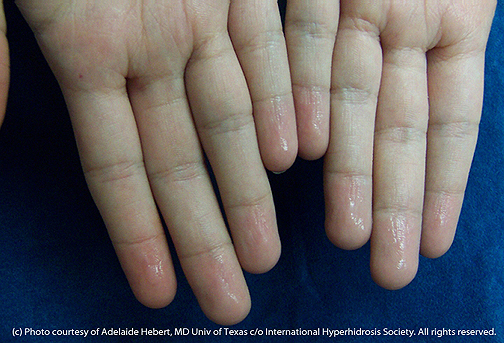
Palmar hyperhydrosis is an embarrassing condition that can put a significant stress on the social, emotional and professional aspects of life. If you or a loved one is suffering from excessively sweaty palms, you are certainly not alone. In fact, more than a million Americans suffer from hyperhydrosis. In this day and age of rapid medical advancement, living with sweaty palms does not have to be a permanent option.
Toxin can substantially decrease sweating by up to 50 percent with each treatment. In many cases, it has stopped sweating completely. It is absolutely safe to use and does not cause any inflammation or irritation. The injections can be easily accommodated within your time schedule. A local anaesthetic is administered in order to alleviate any discomfort caused. The tiniest possible needle is used so as to maximise your comfort level during the treatment. Gone are the days when excessive sweating could put a damper on your life. Botox can provide you with desirable and long-lasting results.
Botox for Hyperhidrosis of the Feet
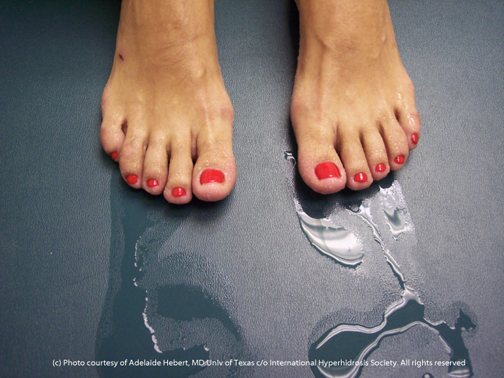
Smelly feet start with sweaty feet (Planar Hyperhidrosis), which can be a problem with embarrassing consequences. It may not be the worst affliction in the world, but if your socks are constantly damp and sweaty, you may have hyperhidrosis.
Do your feet feel soggy and sloppy all the time? Does your sweat ruin your shoes? Are you afraid to wear sandals or flip-flops for fear that you'll slip right out of them?
Do you leave damp footprints when you walk barefoot? Are your feet freezing cold in the winter because they are sweating?
These are just some of the experiences of people with sweaty feet, or plantar hyperhidrosis. Hyperhidrosis, also called excessive sweating, is a medical condition that affects different body areas including the feet. Fortunately, there are treatments available.
Toxin injections are a popular treatment choice for underarm excessive sweating (axillary hyperhidrosis) and may be used to manage excessive sweating on the hands and feet as well. You should know, however, that plantar injections of Botox (injections on the foot) can be painful (although there are pain relieving techniques that experienced physicians use) and the results do not last as long as they do in the underarms. Typically, Toxin injections in the feet tend to "wear off" in 3 to 4 months, meaning you'll need to return for re-treatment at that point.
To learn more about Planar Hyperhidrosis follow this link to sweathelp.org
Botox for Hyperhidrosis of the Head, Face and Neck
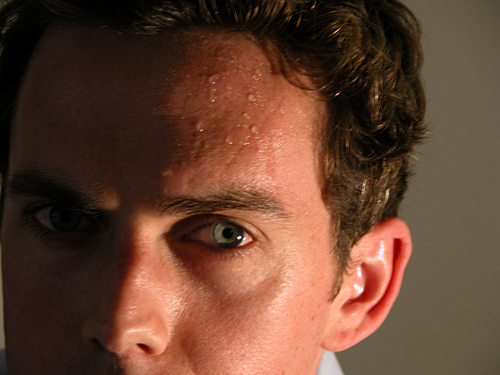
Do beads of sweat pour over your forehead while you're sitting at your desk? Do perspiration rivulets run down your temples during a movie? Has streaming facial sweat gotten in the way of spending time with your family?
If you answered yes to any of these questions, you may suffer from craniofacial hyperhidrosis, or excessive sweating of the face, head, or scalp.
Facial sweating is a common problem and often more irritating and embarrassing than other types of excessive sweating. Even people who sweat heavily in other areas of their body may find that it's their facial sweating that bothers them the most. That's because our faces are how we present ourselves to the rest of the world, and we cannot hide the effects of excessive sweating.
From a diagnostic standpoint, it can be difficult to find the fine line between heavy sweating as a reaction to heat, stress, or exercise and true primary hyperhidrosis of the face and scalp. But regardless of why a person's face sweats excessively — the treatments are the same if it is primary hyperhidrosis.
First, an assessment should be made as to whether a medical condition (other than hyperhidrosis) or medications are the root cause of the excessive facial sweating, which is called secondary hyperhidrosis. It is important to investigate and address underlying causes of the excessive sweating as it may be serious.
If topical antiperspirant solutions don't work or are too irritating, Botox brand injections may be recommended. A potential side effect of Toxin injections in the face as a treatment for sweating is asymmetry, particularly of the forehead. This can happen if some of the Botox diffuses into the facial muscles. Such asymmetry, however, is always temporary and can, if necessary, be balanced-out by additional Botox injections.
How does it work? - An Underarm example
A small volume of solution is injected through a very fine gauge needle into the underarm area. Treatment works by temporarily blocking the chemical signals from the nerves that stimulate the sweat glands. When these glands no longer receive the chemical signals, the excessive underarm sweating stops. The procedure takes about 5-10 minutes, is relatively painless, and the effects of the treatment have been reported to last 6-9 months (Results vary from person to person and eventually will wear off). Depending on the severity of the hyperhidrosis, multiple injections may be needed.
Within 1-2 weeks of the initial treatment there will be significant reduction in underarm sweating. There is a possibility that some sweat glands may be missed during hyperhidrosis treatment. If this occurs, underarm sweating may continue from the untreated areas and a touch-up treatment may be needed.
How much does it cost?- Underarm
The cost of treatment for hyperhidrosis can vary widely. The longevity of the procedure depends on the severity of the condition and the number of units of Botox that need to be used. For optimal results, 100 units is needed. Prices start at €500 at Elanamie Clinic. A detailed treatment plan will be laid out in advance so there are no financial surprises once treatment begins.
Pre Treatment Instructions:
Shave underarms 24 hours prior to procedure.
2 hours before procedure avoid hot beverages or going to gym (if doing “The Starch Test”).
Abstain from use of over-the-counter deodorants or antiperspirants for 24 hours (if doing “The Starch Test”).
Do not consume a alcoholic beverages for 24 hours prior to the procedure.
Avoid taking Aspirin or Ibuprofen 24 hours prior to the procedure (please check with your Doctor if you take either medication on a daily basis for an existing condition)
The Starch Test:
The “Starch Test” is sometimes performed to view where the affected areas of perspiration are located. Not all providers perform this test, as it has been said to be unnecessary. Most providers inject into the area of hair growth, since sweat glands lie just next to each hair follicle.
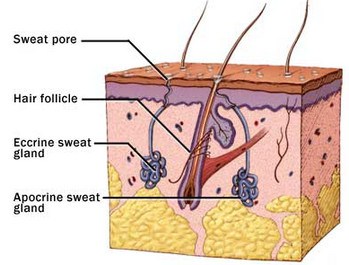
Starch Test Info:
Patients should shave underarms and abstain from use of over-the-counter deodorants or antiperspirants for 24 hours prior to the test. Patient should be resting comfortably without exercise, hot drinks, etc for approximately 30 minutes prior to the test.
Here’s what to expect:
Iodine solution will be painted on.
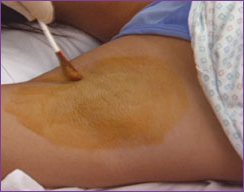
Starch powder will then be sprinkled and allow to settle for 10 minutes.
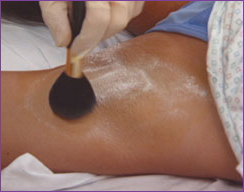
A blue-black mark will identify affected area of perspiration.
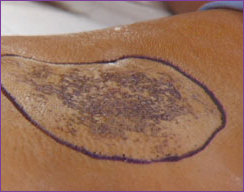
The area will then be circled and marked.
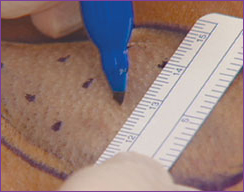
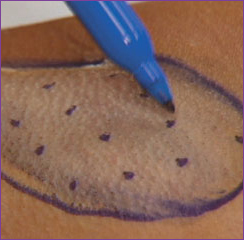
Toxin is then injected just beside each pen mark.
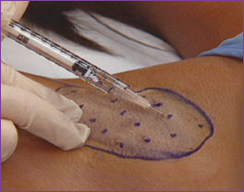
Post Treatment Instructions:
No deodorant for 12 hours
No heavy exercise for 24 hours
After Botox injections gently clean and dry your underarm using a mild soap/cleanser.
You may begin to experience results within 7 days, full effectiveness is achieved at 14 days.
Until the maximum effectiveness of treatment is achieved you can continue to use over the counter antiperspirants.
Contact the clinic, if you are still experiencing sweating in the treated area after 14 days.
For more information about Hyperhidrosis see http://www.sweathelp.org/en/

Is there More Than One Type of Anti Wrinkle Injection?
Not many people know that there are FOUR different types of anti wrinkle injections available and FDA approved for use in the United States and Europe.
Not many people know that there are four different types of Anti Wrinkle Injection products available and approved for use in the United States and Europe.
The four botox products are as follows:
1) Botox by Allergan
2) Neurobloc / Myobloc by Solstice Neurosciences
3) Azzalure / Dysport by Ipsen, Ltd (Now owned by Valeant Pharmaceuticals)
4) Bocouture / Xeomin by Merz
These drugs are called by different names in the UK/Ireland. Botox is Vistabel. Dysport is Azzalure. Xeomin is Bocouture. Myobloc is Neurobloc. For simplicity I will use the FDA labeled names in this blog.
Botox by Allergan was the first and most popular to the point where its product name "botox" is being used interchangeably to mean any botulinum toxin product; much like "Hoover" is used to mean any vaccuum cleaner or "Google" to mean "to search for" even if you use Yahoo.
Botox is made by Allergan and has 85% of the market share while Dysport & Xeomin have 15% share of the Cosmetic Btx market. Currently, Myobloc has approval for therapeutic use only.
Although all four products are made from the Clostridium botulinum bacteria, the four products are isolated from different strains of bacteria, have different molecular structures, and attach to different parts of the nerve. What does this mean for the end-user? It means that dosages are not equivalent across product lines. In other words, 1 unit of botox is NOT the same as 1 unit of myobloc. Furthermore, duration of effect may be different as well as immune response. Also as an FYI, Botox, Xeomin, and Dysport are Botulinum toxin type A whereas Myobloc is type B.
So, What is the difference between Botox, Dysport and Xeomin? and Which is the best one?
Botox is a leading cosmetic treatment that drastically reduces the appearance of crow’s feet, lines on the forehead and frown lines. With US FDA approval and launch of this revolutionary anti-aging product in 1989, millions continue to turn to Botox over 20 years later as part of their aesthetic regimen for looking younger.
However,the two newer products are having great success, Azzalure (approved for cosmetic use in Europe in 2001, US FDA approved 2009) and Bocouture (approved for cosmetic use in Europe in 2005, US FDA approved 2011).
All three are effective treatments that originate from the same source bacterium, clostridium botulinum. They are synthesized as botulinum toxin type A, the paralyzing agent or neurotoxin that is administered. Each has been consistently proven in clinical trials and then worldwide application. The result is almost always the same. Each injectable temporarily paralyzes the targeted muscle areas on the face to relax and ease out the appearance of wrinkles. Because of their proven abilities, each is often paired with a dermal filler like Restylane or Sculptra that results in dramatic facial rejuvenation. This procedure is known as a liquid facelift.
Bocouture is a purified neurotoxin. It is referred to as a ‘naked’ molecule because there are no additive surface proteins, just the botulinum toxin. This solitary agent migrates further and faster to effectively work upon all facial areas upon injection. There is less risk of an allergic reaction or rejection for the client from the absence of protein additives. In addition, Bocouture does not need to be refrigerated.
In comparison, Botox and Azzalure are considered ‘heavier’ because they contain added proteins. These proteins are for protection and are clustered around the botulinum to enable them to last a little longer. However, the clinical argument is that these protective proteins may also shield the active part of the neurotoxin thereby minimizing product effectiveness.
One of the noted benefits of Azzalure is that it spreads a little more than Botox and it is commonly used by patients who have stopped responding to Botox. It is also injected at a different strength and affects a slightly larger area than Botox and Bocouture. It has been reported that Azzalure typically takes two to three days until the effects of the treatment are seen. Botox takes seven to ten days while Bocouture takes five to six days. Azzalure may be the best option in areas where several injections are needed because of its easy spreading to cover a greater area on the face. In the areas where the spread needs to be minimised, Botox may be the best option to concentrate on deeper wrinkling. Over time with different Botox, Azzalure and bocouture injections, clients begin to favour which treatment works best for them.
Botox and Bocouture, have exactly the same units, are reconstituted and administered in exactly the same way, and take effect in the same amount of time, which makes it relatively easy for a practice that uses Botox to add or switch to Bocouture. Because everything about the treatment process is identical, Botox and Bocouture prices can be compared directly. The difference between Bocouture and Botox is that the Botox molecule is stabilised with a protein "wrapper" while the bocouture molecule is "naked". The smaller bocouture molecule is less likely to stimulate the development of antibodies. However, only about 1 in 10,000 Botox patients develop these antibodies so a small reduction in this rate is not significant.
Azzalure has different units than Botox and Bocouture, it is reconstituted differently, and it takes effect one to three days faster. The injection amounts and techniques are different for the same treatment areas, which makes it more difficult for a practice that uses Botox or Bocouture to add or switch to Azzalure. It also makes it more difficult to compare prices.
There are a number of questions that have received a lot of attention and some disagreement:
Should I be worried that Azzalure and Bocouture are newer products?
Not at all because neither Azzalure nor Bocouture are new. Azzalure has been used in fifteen European countries since 1990 and Bocouture has been used in over twenty countries since 2010.
Which medication takes effect faster?
In clinical studies, the effects of Azzalure consistently took effect one to three days faster than Botox or Bocouture.
Which medication lasts longer?
Clinical studies have shown very slight variations in each of the medications but recent studies have concluded that the longevity of all three products is the same. Some researchers have reported that clinical results with Azzalure last longer than Botox (4-7 months as compared with 3-6 months) and that results with Azzalure are often noticed a day or two earlier than with its competitor Botox (2-4 days as compared with 3--8 days). There are also reports documenting that Azzalure improves the appearance of crow's feet significantly better than Botox. This is ascribed to the property of Azzalure to diffuse better. Bocouture seems to act more like Botox than Azzalure. It is observed that it takes about one week for the full effects of Bocouture injections to be realised, and once this occurs, the results seem to last from 3-6 months.
What is the difference between a unit of Botox, a unit of Bocouture, and a unit of Azzalure?
Botox and Bocouture units are identical. Depending on the area being treated, between two and three units of Azzalure are equivalent to one unit of Botox or Bocouture. Since the conversions are not the same for all treatment areas, you cannot directly compare units between Azzalure and the other two medications.
Does Azzalure have a greater diffusion ratio than Botox or Bocouture?
The diffusion ratio is another way of saying how fast and how far the medications spread out from the injection points. This is important because, if the medication spreads out too far, it will affect muscles that were not the target of the treatment. When this occurs, it can cause temporary eyelid droop (ptosis), lowering of the lip, or facial asymmetry. Botox, Azzalure, and Bocouture are distributed as tiny amounts of medication that must be reconstituted and diluted, usually with non preserved normal saline solution. The manufacturers provide recommended dilution amounts and Azzalure recommends about three times more dilution than Botox or Bocouture. This means that three times as much liquid volume is injected for a Azzzalure treatment than for the same Botox or bocouture treatment. The greater volume means that Azzalure has a greater chance of diffusing into muscles not targeted by the treatment. However, the experience and technique of the doctor performing the injection is much more important. Also, clinical trials in which a lower Azzalure dilution was used (2.5:1 instead of 3:1) produced no significant difference in diffusion ratios between Azzalure, Botox, and Bocouture.
Can Botox, Azzalure, and Bocouture treat the same areas?
Because of the greater dilution of Azzalure, Dr. Kelleher does not recommend it for treating fine lines around the mouth or bunny lines near the eyelids. There are reports documenting that Azzalure improves the appearance of crow's feet significantly better than Botox. This is ascribed to the property of Azzalure to diffuse better. Any of the medications can be used for the forehead, glabellar (between the eyebrows), and periorbital (crow's feet) areas. Excessive underarm sweating (hyperhidrosis) can be treated with Botox but Azzalure and Bocouture are not currently used for that purpose.
Should there be price differences for the same treatment areas?
When Azzalure was initially released, the recommended dilutions made Azzalure about 10% less costly than Botox. However, many practices found that a higher concentration of Azzalure was needed to achieve the same results as Botox and this made the prices nearly identical. Bocouture has always been priced identically to Botox. Elanamie Clinic has the same price for Bocouture and Botox treatments. This allows you and Dr. Kelleher to decide between the medications based on a medical examination and a discussion of your own preference and experience, rather than on price.

Botox/Vistabel Factsheet
Fact sheet on Botox/Visabel with links to the Patient Information Sheet
Botox/Vistabel Factsheet
For more detailed information please download the Patient Information Leaflet here http://www.medicines.org.uk/emc/PIL.17544.latest.pdf
Product Summary
[Vistabel - Botulinum Toxin Type A] Currently the number one non-surgical aesthetic treatment in the U.S., Botox® is also the leading brand of botulinum toxin type - A in terms of documented clinical trials and practical use around the world.
Botox®, manufactured by Allergan, was the first botulinum toxin to gain a cosmetic licence endorsing its use for glabellar lines and wrinkles in the US in 2002. It was also eventually licenced for this use in the U.K. in March 2006 under the new brand name of Vistabel® (with a vial dose specific to treat glabellar lines) and was the first brand of botulinum toxin to receive a license for cosmetic use in this country.
Although Botox® is still readily available and used by many UK cosmetic clinics, Vistabel® (although identical in formulation to Botox) is technically the first brand of botulinum toxin type A licensed for cosmetic use in the UK.
Generic name of Vistabel®
Clostridium botulinum type - A neurotoxin complex.
How is it manufactured?
Vistabel® is made from purified type - A neurotoxin produced by the bacteria Clostridium botulinum.
How does Vistabel ® work?
It temporarily prevents the release of acetycholine from sympathetic nerve terminals. To learn in detail how Vistabel® injections work, please click on Botulinum Toxin Treatment FAQ.
Licenced status
Prescription only medicine
Who can perform Vistabel® treatment?
It should be used by trained members of the medical profession only.
Licenced UK indications for Vistabel®
In March 2006, Vistabel® was granted a licence in the UK from the Medicines and Healthcare products Regulatory Agency (MHRA) for the "temporary improvement in the appearance of moderate to severe glabellar lines (vertical `frown` lines between the eyebrows) in adult women and men aged 65 and younger, when the severity of these lines has a psychological impact for the patient" .
Who should not have Vistabel® treatment?
Individuals with a known hypersensitivity to any component of the formulation.
Patients who have generalised disorders of muscle activity (e.g. myasthenia gravis).
Patients where aminoglycoside antibiotics or spectinomycin are already being used or are likely to be used.
Patients who have bleeding disorders of any type.
Pregnant or lactating women.
Reported side effects associated with Vistabel® include
Bruising or bleeding at the site of injection, headache, and rarely eyelid ptosis or diplopia, and brow droop.
Click on Botulinum Toxin Side Effects to learn more about the risks or side effects associated with Vistabel®.
Costs
Most clinics and practitioners charge by area of the face treated, such as the glabellar lines (frown lines between the eyes).
Practitioners may charge from around £175 - £300 per treatment.
Clinical results
Most of the literature on Botulinum Toxin, and hence the clinical evidence and statistics, are based on Botox® as this brand represents around 80% of the world’s use of Botulinum Toxin.
Because it is a prescription only medicine; it had to undergo strict clinical trials in the U.S., where it is approved for cosmetic use, in order to gain a license. Remember, the drug has been licensed in the U.S. since the late 1980s.
Her are the results of a study published in 2001.
500 patients were injected three times in a year with Botox®.They were injected on days 0, 120 and 240.The graph shows that over 70% of the patients showed significant improvement in their glabellar frown lines (i.e. the appearance of their wrinkles when trying not to frown) 30 days after their first injections.This improvement continued after repeat Botox® injections at days 120 and 240.
On the basis of this evidence, most practitioners would now recommend an initial course of Botox® treatment every 3 or 4 months for the first year. It now appears that after this, the time between future injections may lengthen, with practitioners reporting that some patients may only need to return twice a year to maintain results.
Vistabel ® is a registered trademarks of Allergan Inc.
This summary is copyright of http://www.consultingroom.com/treatments/vistabel

Bocouture/Xeomin Factsheet
Fact Sheet on Xeomin/Bocouture and links to Manufacturer's Patient Information Leaflet
Bocouture/Xeomin
For detail Patient Information Leaflet download this file http://www.medicines.org.uk/emc/PIL.23919.latest.pdf
Product Summary
BOCOUTURE®, botulinum toxin type A, has been available in the U.K. since 2008 as the brand name Xeomin®, which is licenced in the UK for blepharospasm and cervical dystonia.
It gained approval for cosmetic use in the UK in July 2010 and is marketed for this indication, with dosing specific to treat glabellar (frown) lines, under the brand name Bocouture®.
Bocouture® claims to be an innovative Botulinum type A formulation, in which the complexing proteins have been removed by an extensive purification process from the botulinum toxin complex. In contrast to the other commercially available preparations, Bocouture® contains the pure 150 kD neurotoxin.
It is widely accepted that the bacterial protein present in other products play a role as promoters of an immune reaction, resulting in a loss of effect and reduction in duration of activity. Studies show that Bocouture®, without the complexing proteins, has the lowest content of protein of all of the available botulinum toxins and furthermore show that repeated application of Bocouture®, even in high doses, does not induce the formation of neutralising anti-bodies.
This means that Bocouture® is able to provide similar results to those achievable with the other products without the risk of antibody formation, providing continual long lasting effects. This could be relevant when large doses are being used for medical indications, but many industry experts questions the relevance when this product is used for cosmetic purposes.
Generic name of Bocouture®
Clostridium botulinum type - A neurotoxin complex.
How is it manufactured?
Bocouture is made from purified type - A neurotoxin produced by the bacteria Clostridium botulinum with complexing proteins removed through purification.
How does it work?
It temporarily prevents the release of acetycholine from sympathetic nerve terminals.To learn in detail how botulinum toxin injections work, please click on Botulinum Toxin Treatment FAQ .
Licenced status
Prescription only medicine
Who can perform Bocouture® treatments?
It should be used by trained members of the medical profession only.
Licenced UK indications for Bocouture®
In July 2010, Bocouture ® was granted a licence in the UK from the Medicines and Healthcare products Regulatory Agency (MHRA) for the "temporary improvement in the appearance of moderate to severe glabellar lines (vertical "frown" lines between the eyebrows) in adult women and men aged 65 and younger, when the severity of these lines has a psychological impact for the patient" .
Who should not have Bocouture® treatment?
Individuals with a known hypersensitivity to any component of the formulation.
Patients who have generalised disorders of muscle activity (e.g. myasthenia gravis).
Patients where aminoglycoside antibiotics or spectinomycin are already being used or are likely to be used.
Patients who have bleeding disorders of any type.
Pregnant or lactating women.
Reported side effects include
Bruising or bleeding at the site of injection, headache, and rarely eyelid ptosis or diplopia, and brow droop.
Click on Botulinum Toxin Side Effects to learn more about the risks or side effects associated with botulinum toxins.
Costs
Most clinics and practitioners charge by area of the face treated. These areas are usually defined as crow’s feet, forehead lines, and glabellar lines (frown lines between the eyes).
Practitioners may charge from around £175 - £300 per treatment area.
A discounted rate is usually employed if more than one treatment is required, so that crow’s feet, forehead lines, and glabellar lines may cost £500 or less for the complete package.
BOCOUTURE® is a registered trademark of Merz Pharma.
This summary is copyright of http://www.consultingroom.com/treatments/bocouture

Dysport/Azzalure Factsheet
Fact Sheet on Dysport/Azzalure and links to Manufacturer's Patient Information Leaflet
Dysport/Azzalure ® Factsheet
For a detailed Patient Information, download the Patient Information Leaflet here http://www.medicines.org.uk/emc/PIL.21990.latest.pdf
Product Summary
Azzalure®, botulinum toxin type A, has been available in the U.K. since the early 1990s as the brand name Dysport®, which has licences for various indications in 67 countries worldwide, including the United Kingdom and many European markets.
It gained approval for cosmetic use in the UK in early 2009 and is marketed for this indication, with dosing specific to treat glabellar (frown) lines, under the brand name Azzalure®.
It is manufactured by the French company Ipsen and commercialised by Galderma.
Generic name
Clostridium botulinum toxin (type) A haemagglutinin neurotoxin complex. (125 Speywood units per vial).
How is it manufactured?
Azzalure® is made from purified type - A neurotoxin produced by the bacteria Clostridium botulinum.
How does it work?
It temporarily prevents the release of acetycholine from sympathetic nerve terminals.
Licenced status
Prescription only medicine
Who can administer the drug?
It should be used by trained members of the medical profession only.
Licenced UK indications
In March 2009, Azzalure® was granted a licence in the UK from the Medicines and Healthcare products Regulatory Agency (MHRA) for the "temporary improvement in the appearance of moderate to severe glabellar lines (vertical "frown" lines between the eyebrows) in adult women and men aged 65 and younger, when the severity of these lines has a psychological impact for the patient" .
The approval was based on several clinical trials involving more than 2,600 patients.
Who should not be treated?
Individuals with a known hypersensitivity to any component of the formulation.
Patients who have generalised disorders of muscle activity (e.g. myasthenia gravis).
Patients where aminoglycoside antibiotics or spectinomycin are already being used or are likely to be used.
Patients who have bleeding disorders of any type.
Pregnant or lactating women.
Not recommended by the manufacturer for use in individuals under 18 years of age.
Treatment interval should not be more frequent than every three months as this can increase the risk of antibody formation.
Reported side effects associated with cosmetic use include
Bruising, swelling, irritation or bleeding at the site of injection, headache, and rarely eyelid ptosis or diplopia, and brow droop.
Clinical data
During the clinical development of Azzalure®, more than 2,600 patients were included in the different clinical trials.
In clinical studies, 1907 patients with moderate to severe glabellar lines have been treated at the recommended dose of 50 Speywood Units. Of these, 305 were treated with 50 units in two pivotal Phase III double-blind placebo-controlled studies and 1200 treated with 50 units in a long-term open-label repeated dose Phase III study. The remaining patients were treated in supportive and dose-ranging studies.
The median time to onset of response was 2 to 3 days following treatment, with the maximum effect observed at day thirty.
In both pivotal placebo-controlled phase III studies, Azzalure® injections significantly reduced the severity of glabellar lines for up to 4 months. The effect was still significant after 5 months in one of the two pivotal studies.
Costs
Most clinics and practitioners charge by area of the face treated. These areas are usually defined as crow’s feet, forehead lines, and glabellar lines (frown lines between the eyes).
Azzalure® is a registered trademark of Galderma.
Information summary copyright of http://www.consultingroom.com/treatments/azzalure

FAQ's On Anti Wrinkle Injections
FAQs on Anti Wrinkle injections
- Dr. Liz Kelleher, manager@elanamie.ie (021) 4219113
FAQ's on Anti Wrinkle injections (AWI)
What are AWI and how does it correct wrinkles?
Not long ago, the so-called "dynamic" wrinkles; wrinkles caused by facial expressions, such as crow's feet, glabellar or frown lines, and forehead lines were the source of much consternation for patients and doctors alike because they were difficult to treat even with surgery. These wrinkles do not also respond well to laser resurfacing or dermal fillers. Currently, botulinum toxin type A, commonly known as Botox, is the most commonly injectable used in the management of these wrinkles. A tiny amount of medicine when injected into tense facial muscles inhibits contraction of the targeted muscle, causing it to relax. With less muscle movement, wrinkles on the overlying skin begin to soften. The cosmetic outcome of AWI are typically visible within 3-7 days and lasts for 3-6 months, depending on the brand and the dose of the product, the type and size of the muscle that is injected, and the quality and the age of the skin overlying the muscle.
The word Botulinum in Botulinum toxin, the neuromuscular blocking toxin, comes from the Latin word botulus, meaning sausage. A widespread illness during Napoleonic wars, now known as botulism, was then found to be associated with the ingestion of a toxin, now known as Botulinum toxin, secreted by the bacteria present in spoiled sausages.
Botulinum toxin type A found in Botox is one of the 7 distinct toxins lettered A through G, produced by Clostridium botulinum bacterium. Botox was the first commercially available diluted and purified botulinum toxin type A product that had received the approval of Food and Drug Administration (FDA) for cosmetic use. Botox is produced by Allergan. It is the most studied brand of botulinum toxin type A in the world.
What is the difference between AWI and fillers?
While Anti Wrinkle Injections temporarily corrects or eliminates dynamic wrinkles by blocking the chemicals that cause the underlying muscles to contract; dermal fillers smooth out wrinkles that exist in the absence of any facial expression; that is, "static" wrinkles. Moreover, dermal fillers can plump up hollows and depressions, such as under eye hollows and sunken cheeks, caused by aging and dieting. There are a large number of available fillers. We use fillers from Merz, Teoxane and Allergan.
Can AWI be combined with dermal fillers?
In cases where untreated wrinkles have become permanently etched in and appear even at rest, or when wrinkles are caused by the looseness of the skin, AWI can be administered in conjunction with other treatments, such as dermal fillers, or fractional laser resurfacing.
How to get prepared for Anti Wrinkle injections?
During your initial consultation, be sure to mention all of the medications, vitamins, and herbal remedies that you are taking. In addition describe any complications you have experienced during previous neuromuscular blocking toxin injections. To minimise the chance of bruising it is important to avoid alcohol, anti-inflammatory medications like Aspirin or Ibuprofen (i.e. NSAIDS) as well as certain herbal preparations and vitamins like Vitamin E, Ginkgo Biloba etc. known to increase bruising.
What to expect during Anti Wrinkle injection Treatments?
You will be asked to remove any makeup before Dr. Kelleher starts injecting the medicine. This will help Dr. Kelleher identify and avoid the veins at injection sites that are prone to bruising, like the crow's feet area.
During the actual procedure, you will be placed in a sitting position. The areas to be treated will be cleansed. Just before the injections, Dr. Kelleher will ask you to repeatedly contract and relax your problematic muscles. Dr. Kelleher will then assess the thickness and quality of your skin, the thickness and size of the underlying muscles, and determine the most appropriate dose and point suitable for the injections. Finally, Dr. Kelleher injects the targeted muscles with the finest possible needle, thus minimizing discomfort and bruising. In the unlikely event that skin bleeding occurs, you will be asked to apply manual point pressure. This helps minimize the extent of bruising.
what is the aftercare like?
For most practical purposes injections are considered lunchtime procedures, where people can return to normal activities immediately after the treatment. However, it is advisable for patients to avoid lying down for 2-4 hours after a treatment, as well as avoiding vigorous exercise, hot showers, sauna and bathtub. These activities may lead to excess blood congestion in injected areas and wash out the medication before it has a chance to interact with the targeted muscles. Furthermore, manual pressure should not be applied on certain injection sites, like the frown line (glabella), in order to avoid diffusion of the injected medication toward the upper eyelid area which may consequently lead to droopy eyelids. Currently, most physicians do not consider exercising the injected muscles after a treatment to be necessary to achieve the desired effect.
When are results seen and how long do they last?
Patients usually notice the clinical effect 3-7 days following injections, and the effect is maximal by 1-2 weeks. The clinical results can vary depending on the skill of the practitioner, the nature, dose and concentration of the product, the frequency of the injections, the nature of the injected muscle, as well as the quality of the skin. For instance, a higher dose for a particular area might be needed if the interval between treatments is much longer than recommended.
The benefits of treatments typically last 3-6 months, except when used for jaw reduction. Surprisingly, jaw line reduction results are slow to show, but usually last more than a year. Younger patients may also experience longer lasting benefits due to the better quality of their skin. Treatments can be repeated as the effects wear off. Deeper wrinkles may require 1 to 2 additional treatments before the best results are seen. In select cases, it may be necessary for the patient to have additional procedures, such filler injections, for optimal results.
Who can administer Botox injections?
In Ireland only Doctors or Dentists are legally permitted to inject the AWI medications. Accordingly, it is very important to have the treatment at a Clinic where a doctor performs the procedure.
What are the conditions that can be treated?
AWI drugs are commonly used to correct the following:
frown lines
forehead lines
crow's feet
bunny lines
corners of the mouth
brow lift or brow balance
smokers lines
wide jawline and square face
gummy smile
teeth grinding
wrinkled and dimpled chin
nasal flare
excessive sweating
chest rejuvenation
What are the contraindications and complications associated with AWI’s?
Although Botulinum, the neuromuscular blocking toxin is associated with botulism, there is no danger of botulism, because botulism is caused by very large amounts of the toxin in the system, usually from eating contaminated food. Very high doses, often 100 times more than would normally be used, would have to be injected to cause harm and botulism.
In fact, risks are very minor when anti wrinkle drugs are used for cosmetic purposes. As of today, no serious issues have been reported among adults who have received botulinum products for cosmetic uses. Adverse effects are usually mild and transient. The most common substantive complication is excessive weakness of the treated muscles, and this resolves as the action of the toxin wears off. Complications such as brow ptosis, eyelid ptosis (Eyelid sagging), neck weakness are usually due to injector error or lack of injector experience. All of these effects are reversible, and fade with time. If you have eyelid drooping after a procedure, it is a good idea to let the Doctor know because there are medicines available that may alleviate this condition. Ptosis can be treated with apraclonidine 0.5% eyedrops. Phenylephrine (Neo-Synephrine) 2.5% can be used when apraclonidine is not available. Note that Neo-Synephrine is contraindicated in patients with narrow-angle glaucoma and in patients with aneurysms. Any other difficulties, such as difficulty breathing or rashes, should be reported to the doctor.
The most common side effects of botulinum toxin used in cosmetic surgery are temporary soreness or mild bruising around the injection sites. Bruising can occur, particularly if a small vein is lacerated or a patient has taken aspirin, vitamin E, or NSAIDs, or has consumed alcohol on the day of injections or the few days preceding the treatment. Ideally, patients should stop taking these products 1 week before the procedure. Applying ice to the injection sites before and after treatment may decrease the pain and the risk of swelling and bruising. Some people may experience a slight headache that lasts for several hours after treatment.
Contraindications include prior allergic reaction and injection into areas of infection or inflammation. Injections are contraindicated for patients with allergic history to egg albumin. Injections are not recommended in pregnant or breastfeeding women. However, many patients have been unknowingly injected during pregnancy and to date no foetal injury or birth defects have been reported in these cases. Nonetheless, to be on the safe side, delay of injections is recommended until pregnancy is complete and breastfeeding has ended.
Botulinum toxins should be used with caution by patients taking certain medications that decrease neuromuscular transmission, such as aminoglycosides, penicillamine, quinine, and calcium channel blockers. Ask your doctor about possible interaction with these medications before a treatment. Patients with certain neurological disorders, such as myasthenia gravis, ALS, or LAMBERT-EATON syndrome could be at an increased risk of side effects.

Post Treatment Fact Sheet Toxin
Here are the Elanamie Clinic post treatment guidelines for Toxin treatment
Do not lie down, rub or massage the treated area for 4 hours after treatment
You can help activate the Botox by gently exercising the muscles that have been treated, i.e. frown and smile as frequently as possible.
Some patients experience slight discomfort around the treatment area for a short time after treatment.
Bruising can be avoided or minimized by avoiding aspirin and alcohol for 24 hours pre & post treatment
You may experience temporary swelling or bruising around the site of treatment. This will usually settle within a day or two.
We recommend arnica application to reduce bruising.
Normal make-up and concealer can be applied the following morning.
Some patients can experience a headache following treatment for which you may take paracetamol.
The results are not permanent and the duration effects last will differ from patient to patient.
The treatment normally takes 4-10 days to take effect.
Side effects, if they occur, are usually temporary and mild to moderate.
Should you experience any other symptoms following treatment please contact Dr. Kelleher at the contact details below.

Post Treatment Fact Sheet - Dermal Fillers
Here are the Elanamie Clinic Post Treatment guidelines for Dermal Fillers...
· Post treatment, there may be some redness, tenderness, or swelling at the treatment site. This is a normal treatment response that will resolve itself within a few days.
· It is not unusual to experience bruising or swelling around the treatment site. This is short term and will subside within a few days.
· Bruising can be avoided or minimized by avoiding aspirin and alcohol for 24 hours pre & post treatment.
· Avoid wearing make-up post treatment for 12 hours.
· There is no need to massage the product area unless specifically instructed to do so.
· Do not expose the treated areas to intense heat (e.g. solarium, sauna) for at least 48 hours after treatment.
· Lip treatments generally take a little longer to settle and may feel tender and appear uneven. This will gradually resolve itself within the first week and will not affect the final result.
· If you have suffered from cold sores, the treatment may result in a fresh eruption of the virus. If this occurs you may use Zovirax cream.
· Rarely, there may be slight visibility of the dermal filler below the surface of the skin.
· Allergic responses to Dermal Filler treatments are rare, as is infection of the treated area. However, if you experience any unusual symptoms, please contact the clinic as soon as possible.
· On very rare occasions (less than one in 15,000 treatments) prolonged firmness, abscess formation or grayish discoloration at the implant site has occurred. These reactions can develop weeks to months following the injections and may persist for several months but normally resolve with time. Even more rarely, the formation of a scab and sloughing (shedding) of tissue at the treatment site has been noted, which could result in a shallow scar.